What It Takes to Restore Water Damage Properly: Tools of the Trade
The water damage restoration process is long and involved, and it’s something you want done properly the first time. Restoration specialists rely on powerful, specialized tools to return your space to its pre-damage condition.
If your home, or a portion of it, is being restored, here are some tools you may see in use during the different stages of the process:
Stage 1 – Detecting Moisture and Diagnosing the Extent of the Damage
- Moisture meters: These are used to detect any invisible moisture and diagnose what’s happening behind or beneath the surface. There are two types:
- Pin-type moisture meters use sharp probes to measure the moisture content in wood or drywall.
- Pinless moisture meters use electromagnetic sensors to take non-invasive surface scans.
- Hygrometers: Measure temperature and humidity to help establish environmental conditions.
- Thermal imaging: Specialized cameras provide a visual representation of temperature differences in an area. Visible temperature differences can indicate hidden moisture.
Stage 1.5 – Protecting the Restoration Team
Following industry and OSHA guidelines, everyone involved in a restoration project must wear the appropriate personal protective equipment, or PPE. This equipment includes:
- Respirators or masks to protect against any airborne contaminants,
- Protective suits and coveralls – especially when dealing with mold or contaminated water,
- Footwear and head protection.
Stage 2 – Extracting the Water with Powerful Machinery
Water extraction is the most important stage in the water damage restoration process because the longer it’s allowed to sit, the more damage your property can sustain. This stage involves:
- Submersible pumps: These can be placed directly in standing water. They are extremely useful for projects involving flooded basements or deep pools of water.
- Industrial-grade wet/dry vacuums: Designed to handle water and debris, making them perfect for small pools of water and hard-to-reach areas.
- Truck-mounted extraction units: These are best for flooding jobs. They’re designed to run for a long time and can handle large amounts of water.
- Portable extraction units: These are best used in smaller jobs because they can be transported easily around a job site.
- Weighted extraction tools (water claws or rovers): Apply downward pressure to pull water from carpet and pads.
Stage 3 – Drying the Area
Once the water has been removed, the drying process can begin. Specialists use:
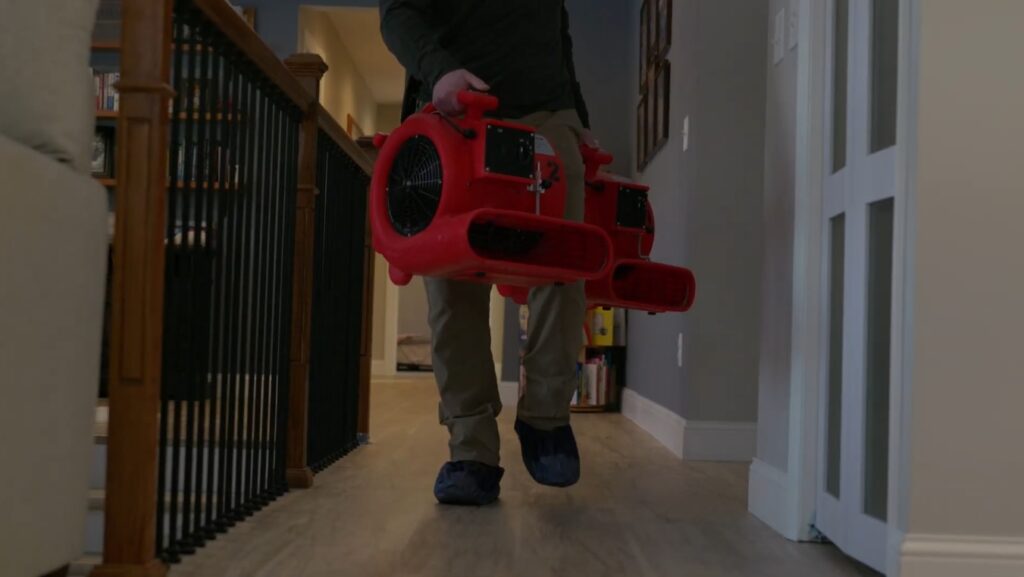
- Air movers: Devices that keep air moving through an area and are typically aimed under carpets or toward walls. There are two types:
- Centrifugal air movers: Compact and ideal for targeting specific areas.
- Axial air movers: Larger and best suited for open spaces.
- Dehumidifiers: Extract moisture from the air to speed up the drying process. There are two types:
- Low-grain refrigerant (LGR) dehumidifiers: Condense water using refrigerant coils; Ideal for high humidity and temperatures.
- Desiccant dehumidifiers: Use chemical drying agents and absorbent materials – like silica gel – to remove moisture on larger projects or in colder conditions.
- Heat drying systems: Typically used on hardwood, tile, and other materials that can warp or crack if they stay wet for too long, helping maintain their salvageability.
Stage 4 – Keeping the Mold at Bay and Removing Odors
This process involves:
- HEPA (High-Efficiency Particulate Air) Air scrubbers,
- Antimicrobial sprayers and foggers to stop mold and bacterial growth, and
- Ozone and hydroxyl generators, which break down odor-causing particles. While hydroxyl machines can operate when humans are in the area, ozone generators cannot.
The Difference Professional Tools Make in the Water Damage Restoration Process
Improper drying can result in:
- Mold growth within 24–48 hours,
- Warped wood and weakened framing,
- Lingering odors, and
- Increased reconstruction costs.
The tools used in the professional water damage restoration process are designed to:
- Accelerate drying,
- Prevent secondary damage,
- Ensure health and safety, and
- Restore structural integrity.
Tools and equipment are only part of the solution – proper training, experience, and decision-making are what ensure water damage restoration is handled correctly. Working with a qualified restoration team helps protect your property and prevent long-term issues.
When water damage occurs, acting quickly and bringing in trained professionals is the safest and most effective step you can take. If you need assistance, the Dryco team is available to help.