
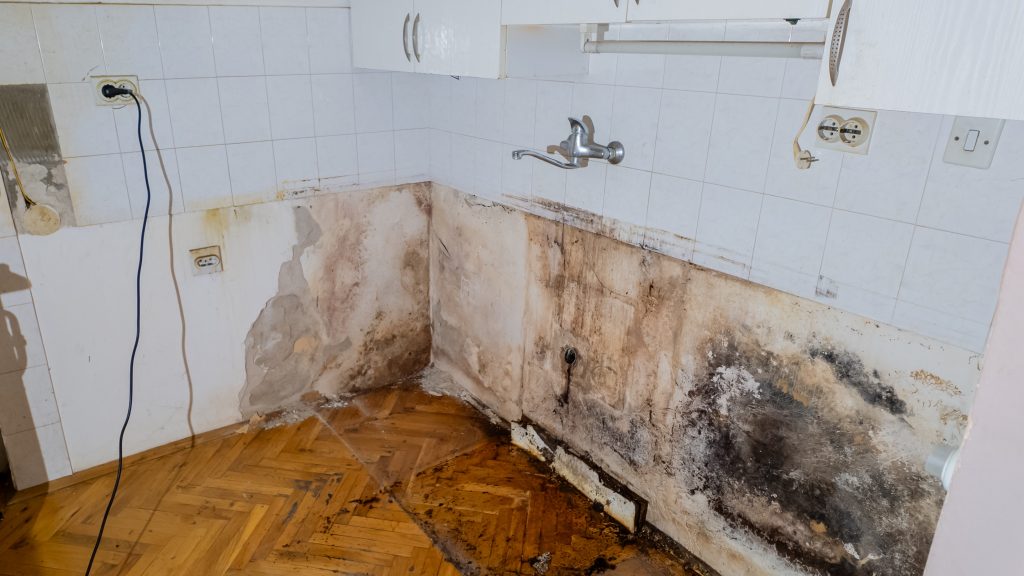
How Fast Does Mold Grow After Water Damage?
Dealing with water damage is bad enough without having to worry about mold growth as well. As a result, one of the biggest concerns when dealing with water damage is how much time you have. Mold can start growing within 24 to 48 hours; however, it’ll take a few days to become visible, which is a problem.
Most homeowners will wait until something looks wrong before they act, and by that time the damage has already started. We’ll walk you through what to expect at the different growth stages, how different factors affect it, and what to do about mold from water damage depending on how long your materials have been wet.
| The short answer Mold spores can begin to germinate on wet materials within 24 to 48 hours. Visible mold often appears in about 3 to 7 days. The EPA advises drying water-damaged materials within 24 to 48 hours to prevent growth. |
What’s Happening Inside the Material That Mold is Growing On
Mold is a type of fungus that reproduces with tiny spores that float in the air. These spores are constantly landing on surfaces, but most of the time nothing happens because those surfaces are dry. Problems only arise when the materials get wet and stay wet long enough for the spores to absorb moisture and start swelling.
As they begin to germinate, they send out thread-like growths (called hyphae) into the material. These will eventually form a colony that will release new spores that will start the cycle again.
This is why mold damages what it grows on. It doesn’t just sit on the surface but works its way into porous materials like drywall paper, wood, and carpet backing. The EPA puts it simply: the longer mold grows, the more damage it can cause.
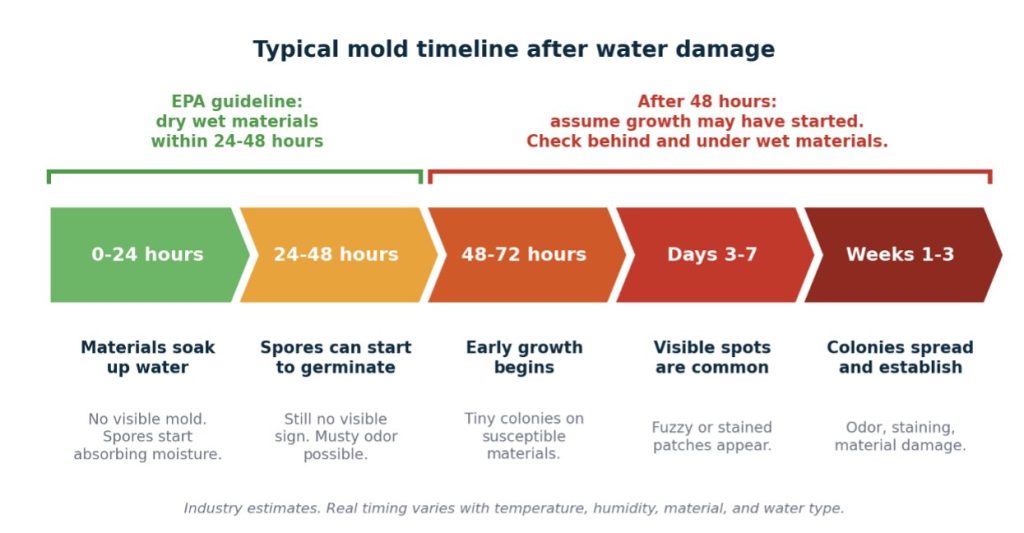
Figure 1. A typical mold timeline after water damage. These are industry estimates, not guarantees.
The Timeline, Stage by Stage
| Stage | What is happening | What you may notice |
| 0-24 hours | Materials soak up water. Spores begin absorbing moisture. | Wet surfaces. No visible mold. |
| 24-48 hours | Spores can begin to germinate on wet organic materials. | Usually nothing visible. A faint musty odor is possible. |
| 48-72 hours | Early colonies can form on susceptible materials. | Musty odor. Tiny spots on paper-faced drywall or pad. |
| Days 3-7 | Colonies grow and become visible. | Fuzzy, speckled, or stained patches. Stronger odor. |
| Weeks 1-3 | Colonies spread and establish. Spores release. | Widespread staining, odor, and material damage. |
Hours 0 to 24: The Setup
On the first day, water spreads and soaks in. Carpet pads take on water, drywall wicks it up from the floor, and wood absorbs it from the surface. There is no visible mold. This is your best window, because if you remove standing water and start drying any affected materials right away, you can stop mold before it starts.
Hours 24 to 48: The Threshold
This is the window the EPA points to. In most cases, if wet or damp materials are dried within 24 to 48 hours, mold will not grow. However, past that point, the odds change. Spores can begin to germinate on materials that are left for longer. You will not see it yet, but the process has begun.
Hours 48 to 72: Early Growth
At this stage, colonies can form on the most susceptible materials. Paper-faced drywall, carpet backing, and cardboard are early sites of mold growth. You may start to notice a musty smell or small spots if you pull back a corner of carpet or look behind a baseboard.
Days 3 to 7: Visible Mold
This is when most homeowners first see mold. It may look fuzzy, speckled, or like dark staining, and what you see on the surface is only a small part of what is growing inside the material.
Weeks 1 to 3: Established Colonies
Without intervention, the mold will keep spreading. This will lead to stronger odors, deeper stains and the materials starting to break down. At this point, simply drying the materials may no longer be an option. You, or rather a professional, should assess the extent of the growth, determine which materials can be cleaned and dried, and identify anything that needs to be removed and replaced.
Why 48 Hours Is a Guideline, Not a Rule
The 24-to-48-hour window comes from EPA guidance on responding to clean-water damage. It’s useful because it gives people a clear target, but the EPA is careful about how it frames it for a couple of reasons:
- Mold will not always grow after 48 hours. The number is a guideline only.
- Mold may have started even if you dried everything in time. The EPA says this directly.
- The guidance applies to clean water. If the water was sewage or floodwater, call a professional.
This window should function as more of a drying deadline, not a safe zone.
What Speeds Mold Up, and What Slows It Down
The way a water event plays out entirely depends on the factors at play.
| Factor | Speeds mold up | Slows mold down |
| Temperature | Warm rooms. Most heated homes sit in a range where mold does well. | Cold areas. Growth slows as temperatures drop, but spores survive. |
| Humidity | High indoor humidity keeps materials damp. | Low humidity helps materials dry. |
| Airflow | Still air in closed cavities, closets, and crawlspaces. | Moving air across wet surfaces. |
| Material | Paper-faced drywall, carpet pad, ceiling tile, cardboard. | Concrete, tile, metal, and glass. |
| Water type | Sewage or floodwater adds contamination risks and may require specialized cleanup. | Clean water gives mold less to work with, but still needs to be dried quickly. |
| How wet and how long | Deep saturation. Long contact time. | A light surface wetting that dries fast. |
Temperature is one of the most concerning factors to consider if you’re worried about mold growth after water damage. Warm, humid conditions speed growth, which is one of the reasons mold can develop faster after a summer water event than a winter one. A well-heated home in Duluth will stay warm all winter, which can disguise a wet wall cavity inside.
Which Materials Show Mold First
Because porous materials hold water and contain organic matter, they tend to be the most prone to mold.
- Paper-faced drywall. The paper facing is food for mold. Water also wicks up the wall above the visible waterline.
- Carpet backing and pad. Pad acts like a sponge and dries slowly.
- Ceiling tile and insulation. Both are absorbent and hard to dry once saturated.
- Cardboard and paper. Stored boxes in a wet basement often show mold early.
- Wood. Framing and subfloor take longer to show growth, but they can stay wet for a long time.
While nonporous materials don’t contain anything to feed mold on their own, if they’re not cleaned and dried frequently enough they can collect dust and dirt, which supports mold growth.
Why You Often Cannot See It
Water can seep into wall cavities, under flooring, and above ceilings. Those spaces are dark and still, and they dry slowly, meaning mold can grow unnoticed for days or weeks.
The first signs are often subtle: a faint musty odor, a paint blister, a baseboard that feels slightly soft, or a stain that grows larger after it rains. Being aware of hidden mold warning signs and why you can have mold without a musty smell is incredibly important.
What to Do Based on How Long It Has Been
| Time since the water event | What to do |
| Under 24 hours | Act now. Stop the source. Remove standing water. Start extraction and drying. Call a professional if the water covers more than a small area. |
| 24 to 48 hours | You are at the edge of the window. Dry everything you can. Remove porous materials that stay wet. Call a professional for anything inside walls or under floors. |
| 48 to 72 hours | Assume mold may have started. Check behind baseboards, under carpet, and in cabinets. Get moisture readings. Call a professional. |
| 3 to 7 days | Mold is likely present on susceptible materials. Do not disturb it. Call a professional for an assessment. |
| More than a week | Expect established growth. Wear protection. If you suspect mold contamination in your HVAC system, don’t run it. Call a professional for remediation. |
If you’ve just been made aware of days old water damage, knowing how to check for mold can help you determine your next steps.
How This Plays Out in Duluth Homes
Local conditions affect the timeline. Many Duluth homes have basements, crawlspaces, and layers of older construction, and those spaces tend to be damp and poorly ventilated. A wet basement wall can stay damp for weeks after the water is gone.
Winter adds another twist. The cold makes people keep their windows shut and the heat on, so a wall cavity that gets wet from a frozen pipe bursting or an ice dam leak stays warm and sealed.
Speedy water extraction and professional drying can help prevent mold growth before the 48-hour window closes.
What Dryco Does Inside the Window
Dryco responds to water damage 24/7. In Duluth and the immediate Twin Ports area, we aim to be on site within 60 minutes. Our crews are IICRC certified, and on arrival, these are the first things we do:
- Find and confirm the water source is stopped.
- Remove standing water with professional extraction equipment.
- Map moisture with meters and thermal imaging to find where the water traveled.
- Remove any materials that cannot be dried, like soaked carpet pad.
- Set up air movers and dehumidifiers, then take daily readings until the structure is dry.
If mold has already started growing, we can also handle remediation. While we don’t rebuild, if drywall or flooring needs replacing after drying, we will document the scope for your licensed contractor.
Learn about our water damage services or mold remediation services. You can also contact us 24/7.
Frequently Asked Questions
Q: Can mold grow in 24 hours?
Mold spores can begin to germinate within 24 hours of getting wet. Most guides say early germination happens in the 24-to-48-hour range, but you will not usually see mold at that point. Visible growth takes longer.
Q: How long until I can smell mold?
It varies. A musty odor can appear in as little as a couple of days if moisture is trapped, but some mold grows with little or no smell. Do not rely on your nose alone.
Q: Does mold grow faster in summer than winter?
Often, yes. Warm, humid conditions speed up growth, but heated homes in Duluth stay warm in winter, and trapped moisture in a wall or basement can support mold all season.
Q: What if the water sat for a week before I noticed it?
Assume mold may be present. Do not scrub or disturb it. Keep the HVAC off if you suspect growth near the system. Call a professional for a moisture inspection and, if needed, remediation.
Q: Is the 48-hour rule the same for sewage?
No. The EPA guidance applies to clean-water damage. Sewage and floodwater carry bacteria and other contaminants. Call a professional with experience in contaminated water right away.
Resources
Dryco:
External:
EPA: Mold Cleanup in Your Home