Why Blood Cleanup Is Dangerous Without Professional Training
Of all the situations covered under biohazard cleanup, blood exposure is one of the most common and underestimated. Understanding the blood cleanup danger is important because blood is not simply a stain to be scrubbed away. It is a biological material that may contain bloodborne pathogens, and improper cleanup can expose people to contaminated material.
What Bloodborne Pathogens Actually Are
Bloodborne pathogens are infectious microorganisms present in human blood that can cause disease. The three most significant concerns in cleanup situations are Hepatitis B (HBV), Hepatitis C (HCV), and HIV. Exposure can occur when infected blood comes into contact with broken skin, mucous membranes, or the eyes, or enters the body through a puncture or other direct route.
| Pathogen | Key Concern | Why it Matters |
| Hepatitis B (HBV) | Highly infectious; can survive well outside the body | Can remain infectious on surfaces for at least 7 days under appropriate conditions |
| Hepatitis C (HCV) | Infectious through blood contact | Can remain infectious outside the body for days under certain conditions |
| HIV | Less environmentally stable than HBV/HCV | Doesn’t survive well outside the body and is not transmitted through ordinary contact with contaminated surfaces |
This is why OSHA’s Bloodborne Pathogens Standard treats all blood and visibly contaminated materials as potentially infectious, regardless of the known or unknown health status of the source.
Why Dried Blood Is Not Safe to Handle
A common misconception is that once blood dries, the blood cleanup danger disappears. This is false. Hepatitis B in particular can remain infectious in dried blood for at least a week under appropriate conditions. Disturbing dried blood during an improper cleanup attempt can spread contaminated material to surrounding surfaces and increase the risk of direct exposure.
How Blood Penetrates Different Materials
| Material | Penetration Behavior | Cleanup Implication |
| Carpet and padding | Absorbs deeply; wicks beyond visible stain | Contaminated padding may require removal and replacement |
| Hardwood flooring | Can penetrate finish and seep between boards | May require sanding, refinishing, or board replacement |
| Drywall | Wicks upward and outward from point of contact | Deeply contaminated sections may need to be removed and replaced |
| Grout and tile | Porous grout absorbs; tile surface does not | Contaminated grout often needs to be cleaned and disinfected |
| Upholstered furniture | Penetrates fabric and foam padding | Often requires professional treatment or disposal |
The Correct Professional Approach
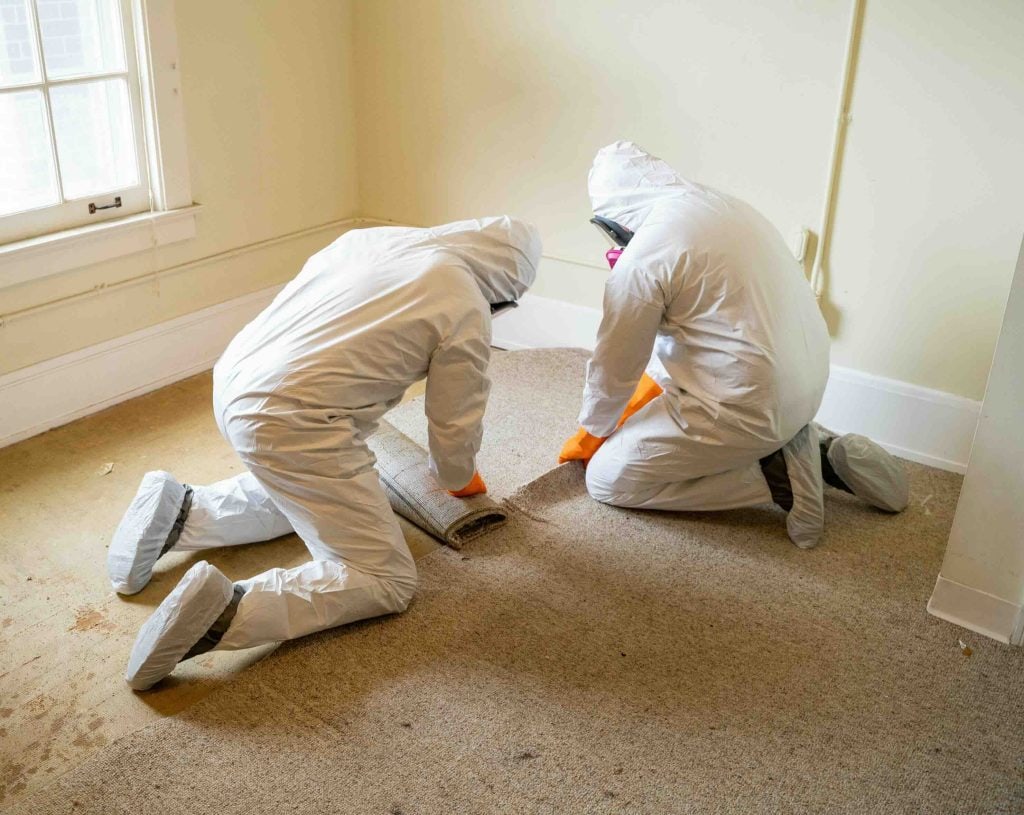
- Appropriate PPE, including gloves and eye protection, should be used before handling contaminated materials. Additional protective equipment may be necessary depending on the cleanup conditions.
- Containment of the area to prevent spread of contamination during cleanup.
- Removal of any porous materials that cannot be adequately disinfected, following regulated waste disposal procedures.
- Application of EPA-registered disinfectants labeled for use against the relevant pathogens, following the product’s required concentration and contact time.
- Final inspection of the affected area to ensure contaminated materials have been removed or properly cleaned and disinfected.
Dryco’s team follows OSHA Bloodborne Pathogens Standard protocols on every blood cleanup call. Learn more about our biohazard cleanup services or contact us 24/7.
Frequently Asked Questions
Q: How long does the blood cleanup danger last?
This depends on the pathogen present, which is typically unknown without testing. Because Hepatitis B can remain infectious for at least a week, the safest approach is to treat any blood contamination as potentially infectious until professionally disinfected, regardless of how much time has passed.
Q: Can regular household cleaners disinfect blood-contaminated surfaces?
Standard household cleaners are not necessarily effective against bloodborne pathogens. Effective disinfection requires an EPA-registered disinfectant labeled for use against the relevant pathogens and used according to the product’s instructions, including the required concentration and contact time.
Q: What should I do if I discover a blood-contaminated area in my home?
Avoid direct contact, keep others (especially children and pets) away from the area, and contact a professional biohazard cleanup company. Do not attempt to clean the area with household products, as this can spread contamination without eliminating the health risk.
Resources
Dryco:
External:
OSHA: Bloodborne Pathogens Standard