Why Professional Smoke Removal Matters
After a house fire, the instinct to handle cleanup yourself is understandable. And there is no shortage of online guides offering step-by-step DIY smoke cleanup instructions. However, the dangers that come with cleanup make professional smoke removal vital.
The Health Risks of Smoke Residues
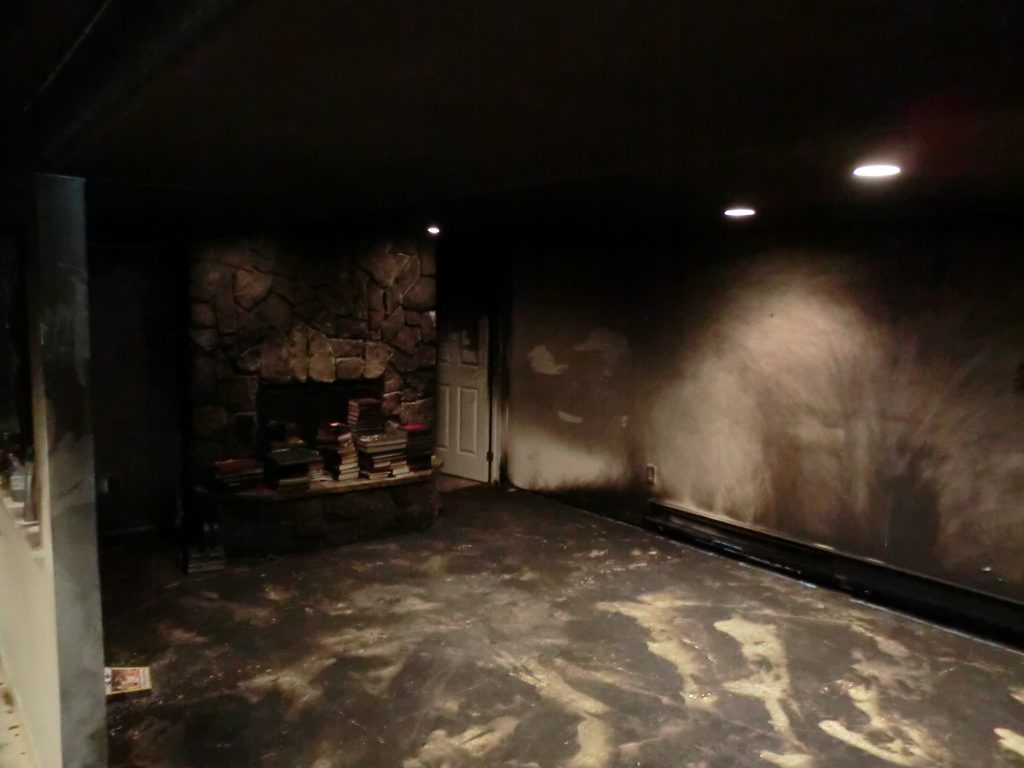
Smoke residue from residential fires is chemically complex and highly toxic. The specific compounds present depend on what burned, but all fires produce a similar core set of hazardous materials:
| Compound | Source | Health Effects |
| Polycyclic Aromatic Hydrocarbons (PAHs) | Incomplete combustion of organic materials | Known carcinogens; skin absorption and inhalation risk |
| Acrolein | Burning wood, paper, fabrics | Severe respiratory irritant; tears, coughing, airway inflammation |
| Hydrogen Cyanide | Burning synthetics, foam, nylon | Highly toxic; headache, nausea, confusion at low levels |
| Carbon Monoxide* | All incomplete combustion | Colorless, odorless; fatal at high concentrations |
| Formaldehyde | Burning treated wood, foam, fabrics | Carcinogen; eye, nose, throat irritation |
| Heavy Metals (lead, etc.) | Burning paint, treated wood, electronics | Neurotoxic; particularly dangerous to children |
| Fine Particulates (PM2.5) | All fires | Deep lung penetration; linked to cardiovascular and respiratory disease |
*Most hazardous during and immediately after a fire.
These compounds do not disappear after the fire is out. They remain in soot, in surface residues, and embedded in porous materials throughout the home. Prolonged low-level exposure, such as spending time in an inadequately remediated home, poses real health risks, particularly to children, elderly individuals, pregnant women, and anyone with respiratory or cardiovascular conditions.
| High-Risk Populations Children: Breathe at a higher rate relative to body weight; developing systems are more vulnerable to toxic exposure. Elderly: Reduced respiratory and immune capacity increases susceptibility to particulate and chemical exposure symptoms. Asthma / COPD sufferers: Pre-existing airway inflammation dramatically worsens with smoke residue exposure. Pregnant women: Fetal exposure to PAHs and heavy metals carries developmental risk. Pets: Smaller body mass and more time spent close to floors (where particulate concentrations are often highest) increase exposure. |
What DIY Cleanup Misses
Consumer cleaning products, household vacuums, and manual wiping aren’t enough to deal with smoke damage completely. They’re not designed for it and consistently fail to address:
HVAC Ductwork
Unless you have professional duct cleaning equipment, smoke residue in your ductwork will constantly recirculate through the home every time you use your system. This can leave DIY remediation incomplete in many cases.
Wall and Ceiling Cavities
Smoke penetrates wall cavities through electrical outlets, seams, and gaps in insulation. You cannot reach these areas with consumer cleaning products.
Insulation
When attic and wall insulation absorbs smoke compounds, it needs to be replaced. This is a step many homeowners tend to skip, leaving a major ongoing odor and health hazard in place.
Molecular Odor Compounds
Household cleaners neutralize some surface residues but do not address the VOCs (volatile organic compounds) and PAHs bonded within porous materials. These usually need to be treated with hydroxyl generators, thermal fogging, or, in some cases, ozone treatment.
Subfloor and Flooring Systems
Smoke settles on and between floor systems: under carpeting, in subfloor gaps, and in the spaces between flooring. These areas are assessed and treated appropriately during professional smoke removal.
Insurance Implications of Non-Professional Remediation
From an insurance perspective, non-professional cleanup creates significant complications:
- Your insurer may dispute the completeness of remediation if it was not performed by a certified professional
- Subsequent damage (odor, mold, structural deterioration) resulting from incomplete remediation may not be covered as a secondary claim
- DIY cleanup that improperly cleans or discards damaged property can void or reduce personal property coverage
- Many insurers prefer or request documentation showing that remediation followed recognized industry standards, such as those established by the IICRC; without it, claim closure may be delayed or disputed
By contrast, professional restoration companies provide detailed scope documentation, progress photos, and clearance testing that supports a complete and efficient insurance claim. Dryco works directly with insurance carriers and adjusters throughout the remediation process.
Learn about our agent and adjuster resources.
What Professional Removal Provides That DIY Cannot
| Capability | DIY | Professional |
| HEPA filtration of particulates | Consumer units are insufficient, must be rented or purchased | Industrial HEPA air scrubbers |
| Ductwork decontamination | No practical DIY method | Professional duct cleaning equipment |
| Thermal fogging penetration | No consumer equipment available, must be rented or purchased | Standard professional tool |
| Industrial ozone generation | Consumer units are insufficient, must be rented or purchased | Industrial units reach substantially higher concentrations than consumer units |
| Structural moisture assessment | Consumer units are insufficient, must be rented or purchased | Thermal imaging, moisture meters |
| Certified remediation documentation | No | IICRC-standard documentation |
Ready to speak with Dryco about professional smoke removal in your home? Contact our team 24/7. We serve Duluth and the surrounding region including Superior, Virginia, Hibbing, and Grand Marais.
Frequently Asked Questions
How soon after a fire should smoke odor removal begin?
As soon as the property is safe to enter. Smoke residues are acidic and bond to surfaces within hours, so the longer they sit, the more they stain and etch materials and the harder the odor is to remove. Starting quickly limits the spread of damage, keeps more of your belongings salvageable, and usually reduces the overall cost of fire and smoke damage remediation.
Do I have to use a professional if I have insurance?
Not necessarily. Many insurers expect remediation to follow industry standards and may require documentation demonstrating that cleanup was performed appropriately. Attempting DIY cleanup and then seeking professional remediation later (after compounds have further set) typically costs more and recovers less.
What certifications should a smoke removal professional have?
Look for IICRC certifications such as Fire and Smoke Restoration Technician (FSRT). Additional certifications may also be relevant depending on the scope of work being performed. To find a restoration company that is certified to handle the cleaning of your personal property, look for CPT (Contents Processing Technician) and OCT (Odor Control Technician) certifications.
How do I know if a company is doing the work correctly?
Ask for a written scope of work before any work begins. The scope should specify the smoke type, affected areas, cleaning methods for each surface, odor treatment methods, and clearance testing plan. A reputable company welcomes these questions.
Resources
Dryco Internal Resources:
Fire & Smoke Damage Restoration
External Resources:
CDC — Health Effects of Wildfire Smoke
NFPA — Fire Loss in the United StatesIICRC — Fire and Smoke Restoration Technician (FSRT) Certification