
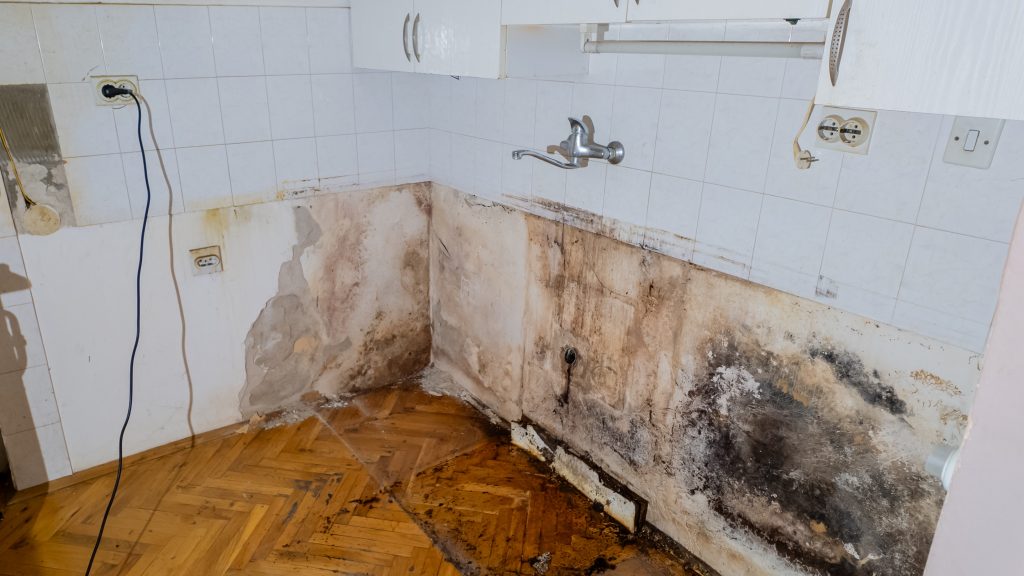
Why Untreated Water Damage Gets Worse Fast
One of the most expensive mistakes you can make when dealing with water damage is assuming it can wait. The untreated water damage risks go beyond wet carpets and damaged drywall. Left unaddressed, moisture can spread into hidden areas, damage building materials, and create conditions for mold growth.
What ‘Getting Worse’ Can Look Like
| Day 1 (Addressed Promptly) | Day 3-5 (Left Untreated) | |
| Carpet and padding | Drying or removal begins promptly | Moisture may remain trapped, with odors or mold growth possible |
| Drywall | May be dried in place if caught early | Removal and replacement may become necessary |
| Furniture | Minimal furniture damage | Swelling, staining, or finish damage may develop |
| Mold | No visible mold, the risk of development is significantly reduced | Mold growth may require remediation in addition to water restoration |
| Restoration Costs | Lower overall | Significantly higher cost due to expanded scope of work |
The Financial Impact of Delay
The cost difference between a prompt and delayed response isn’t always incremental. Delays can increase restoration costs, especially when moisture spreads to additional materials or mold develops. A situation that could’ve been resolved with extraction and drying alone can expand to include material replacement, mold remediation, and a significantly longer project timeline once secondary damage has set in.
Why Mold Is the Turning Point
Mold can begin growing within 24 to 48 hours when conditions are right. Once it develops, drying the affected area may not be enough. Depending on the extent of the growth, the project may also require mold removal and additional precautions to prevent spores from spreading.
Learn more about our mold remediation services if mold has already developed.
Insurance Implications of Delay
Most homeowners insurance policies require you to take reasonable steps to prevent further damage after a covered loss. Delaying cleanup can complicate a claim, particularly if preventable damage occurs after you’ve found the water damage. What your insurer covers depends on your policy and the circumstances of the loss.
For more on how this affects your claim, see our resource on navigating property claims.
The Bottom Line
Leaving water damage unaddressed can turn a relatively straightforward drying job into a more extensive restoration project involving material replacement or mold remediation. A prompt professional response can help limit further damage and reduce the likelihood of more extensive repairs.
Dryco provides 24/7 emergency response throughout the Duluth region. Contact us the moment you discover water damage.
Frequently Asked Questions
Q: Is it ever reasonable to wait a day or two before calling someone?
Generally, it’s best not to wait. Even if the damage appears minor, a professional can check for hidden moisture beneath flooring or inside walls and help determine whether drying is needed. Waiting risks converting a manageable situation into a significantly larger one.
Q: What if the damage still looks minor after a couple of days?
Visible appearance is not a reliable indicator of what is happening beneath the surface. Moisture can remain trapped in subfloor, insulation, or wall cavities long after surfaces appear dry. Professional moisture readings can help identify damps areas that visual inspection might miss.
Q: Can delayed water damage still be fully restored?
In many cases, yes, although the cost and scope of repairs may increase with time. Whether materials can be dried and saved or need replacing depends on how long they’ve been wet, the type of material, and whether mold or other damage has developed.
Resources
Dryco:
Water Damage Restoration Services
External: