1,500 Gallons of Sewage in One Crawl Space: A Superior, WI Case Study
Introduction
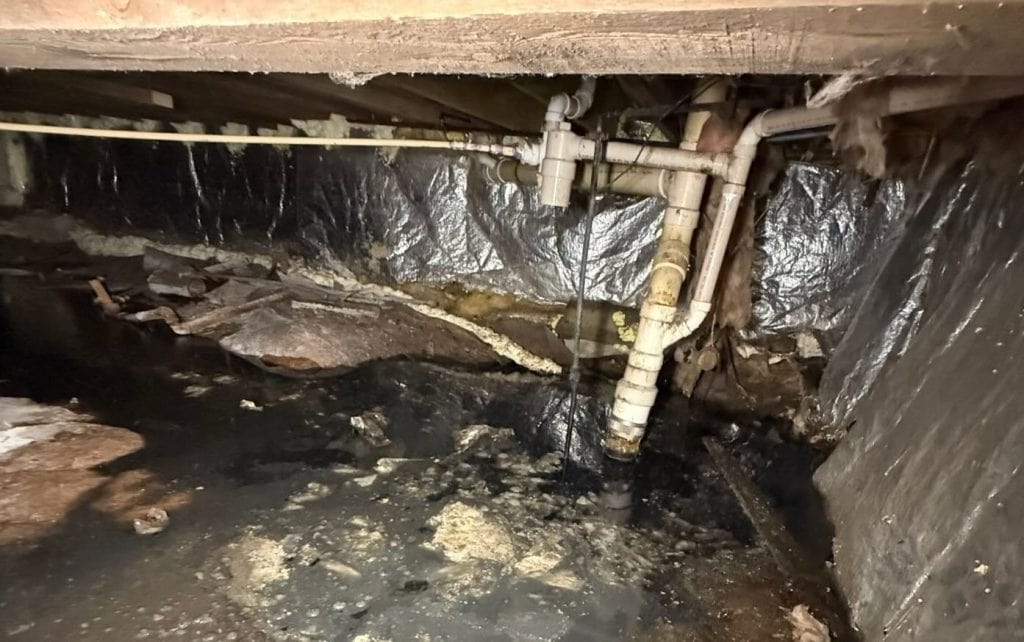
This project started the same way that many of our projects start. A Superior, Wisconsin homeowner called Dryco after sewage began accumulating in their crawl space. What seemed like an isolated backup at first, turned out to be the result of a failed sewer line shared by four separate homes. Our team handled the cleanup, and Contour Inc., a Duluth-based trenchless sewer and excavation company, was able to come in, diagnose the real problem beneath the surface, and permanently fix it.
This is the story about how we handled the initial cleanup, why the sewage kept returning even after that cleanup was complete, and what it ultimately took to solve the problem for good.
The Call: Sewage in the Crawl Space
The homeowner’s sewer line ran beneath their crawl space as part of a larger system: four homes on the block shared a single sewer lateral. It carried wastewater out to the municipal main. Shared laterals like this are more common in older neighborhoods than most homeowners realize. And they work fine for years, right up until one section fails.
In this case, the shared line had collapsed underneath a neighboring property, several feet below that home’s own crawl space. The break was severe enough that raw sewage had nowhere to go but backward, into our client’s crawlspace rather than forward into the sewer main under the street.
Dryco’s Role: Emergency Sewage Cleanup
Dryco was the first call. Our team responded to remove the sewage, treat the affected crawl space, and stabilize the area so that whatever repair was needed could be performed in a clean space. Raw sewage backup is classified as Category 3, or black water, contamination. That means that it carries bacteria and pathogens that require professional-grade disinfection, not just extraction and drying.
| Step | What We Did |
| Assessment | Confirmed the extent of contamination in the crawl space and surrounding structure |
| Extraction | Removed standing sewage using professional extraction equipment |
| Disposal | Disposed of contaminated materials that could not be adequately disinfected, following regulated waste guidelines |
| Disinfection | Treated all remaining surfaces with EPA-registered disinfectants appropriate for Category 3 contamination, and hydrated lime |
| Documentation | Photographed and documented the damage for the homeowner’s insurance claim |
This is standard procedure for any sewage backup. In most cases, once the cleanup is finished and the source of the blockage is cleared, that’s the end of it. This time, it wasn’t.
Why the Sewage Kept Coming Back
Within roughly three days of our initial cleanup, an estimated 1,500 additional gallons of sewage had accumulated in the same crawl space. The reason came down to how the shared lateral was built. Because four homes fed into the same line, sewage from the other three properties continued flowing through it around the clock, regardless of whether our client used a single drain or toilet in their own home.
With the line broken beneath the neighboring property, that continuous flow from three other households had nowhere to go except backward into our client’s crawl space, over and over, no matter how many times it was cleaned up. A one-time cleanup was never going to solve a problem that was structural, not incidental.
Bringing In Contour
Sewage cleanup is our expertise. Diagnosing and replacing a failed sewer line is not. In these situations, the right move is to bring in a specialist.
Contour’s team investigated the line and confirmed what we suspected. The break was beneath the neighboring home. Because the shared lateral is jointly owned by the homeowners it serves, repairing it at the point of failure required the neighbor’s permission to excavate beneath their crawl space.
That permission was not granted. With the direct repair no longer possible, Contour designed a different solution. They abandoned the shared lateral and installed a new independent sewer line. The new line ran directly from our client’s home to the municipal main in the alley.
How the Permanent Fix Came Together
- Contour capped the existing shared line at the point where it entered the client’s crawl space, immediately stopping any further backflow from the neighboring properties.
- A licensed plumber rerouted the sewer piping within the crawl space to the new connection point.
- Contour excavated a trench and installed a new 4-inch PVC sewer service running from the home directly to the municipal sewer main in the alley, completely bypassing the failed shared lateral.
- The excavation, sidewalk sections, and yard were restored and compacted to as close to original condition as practical.
You can read Contour’s full technical write-up of the permanent repair, including project photos, here: How 1,500 Gallons of Sewage Filled a Superior Crawl Space.
What This Homeowner Went Through
This is a genuinely difficult situation for any homeowner: a problem that isn’t caused by anything you did, that keeps recurring no matter how much you clean, and that ultimately requires permission from a neighbor who isn’t obligated to give it. Having a clear explanation of what was happening and why made it possible for this client to make good decisions at every step.
Do You Have a Shared Sewer Line?
Shared sewer laterals are more common than most homeowners realize, particularly in older neighborhoods throughout Duluth, Superior, and the surrounding Twin Ports area. A few signs your property may be on a shared line:
- Your home is in an older neighborhood with homes built close together or on small lots.
- A sewer backup happens even when no one in your home has run water recently.
- A previous owner or neighbor has mentioned a “shared line” or “common sewer” in the past.
| Question | Why It Matters |
| Is my sewer lateral shared with any other property? | Determines who else’s usage affects your line, and who must approve repairs at any given point |
| Has a sewer camera inspection ever been done on my line? | A camera inspection can identify a shared connection or existing damage before it becomes an emergency |
| Does my homeowner’s insurance cover sewage backup? | Coverage typically requires a specific water/sewer backup endorsement; standard policies often exclude it by default |
Two Companies, One Complete Solution
This case is a good example of why it matters to have the right company for each part of a restoration situation. Dryco handles the sewage cleanup, disinfection, and biohazard remediation quickly and thoroughly, while a company like Contour handles the underlying sewer line diagnosis and permanent repair. Neither of us replaces the other, and that division of expertise is exactly why this homeowner’s situation got fully resolved rather than temporarily patched.
If you’re dealing with a sewage backup right now, our team is available 24/7. Learn more about our sewage backup cleanup services and our biohazard cleanup services, or contact us for an immediate response.
Frequently Asked Questions
Q: How do I know if my sewer line is shared with a neighbor?
Older neighborhoods, particularly those built before individual lateral connections became standard practice, sometimes have multiple homes feeding into one lateral line. A sewer camera inspection, performed by a company like Contour, can confirm whether your line is shared and where any existing damage sits.
Q: Why did the sewage keep coming back after the first cleanup?
Because the underlying sewer line was broken, not just blocked. Cleanup addresses the sewage that has already entered a space; it does nothing to stop more sewage from entering if the line itself is still failing. That’s why persistent or recurring backups almost always point to a structural issue that requires a plumbing or excavation specialist, not just repeated cleanups.
Q: Can a shared sewer lateral be repaired without a neighbor’s permission?
Generally, no, if the point of failure sits beneath the neighbor’s property. Because shared laterals are typically owned jointly by the homes they serve rather than by the municipality, excavating beneath a neighboring home requires that homeowner’s consent. If consent isn’t granted, alternatives like installing an independent line, as happened in this case, become the practical path forward.
Q: Does Dryco handle sewer line repair or replacement?
No. Dryco handles the sewage cleanup, disinfection, and biohazard remediation side of a situation like this. Diagnosing and repairing or replacing the sewer line itself is plumbing and excavation work, which is outside our scope. We work alongside trusted specialists like Contour Inc. to make sure homeowners get the right expertise for each part of the problem.
Resources
Dryco:
Sewage Backup Cleanup Services
Contour Inc.:
Full Project Write-Up: How 1,500 Gallons of Sewage Filled a Superior Crawl Space
Contour Inc. — Duluth’s Trenchless Sewer and Water Line Specialists
Sewer Camera Inspection Services
External: