
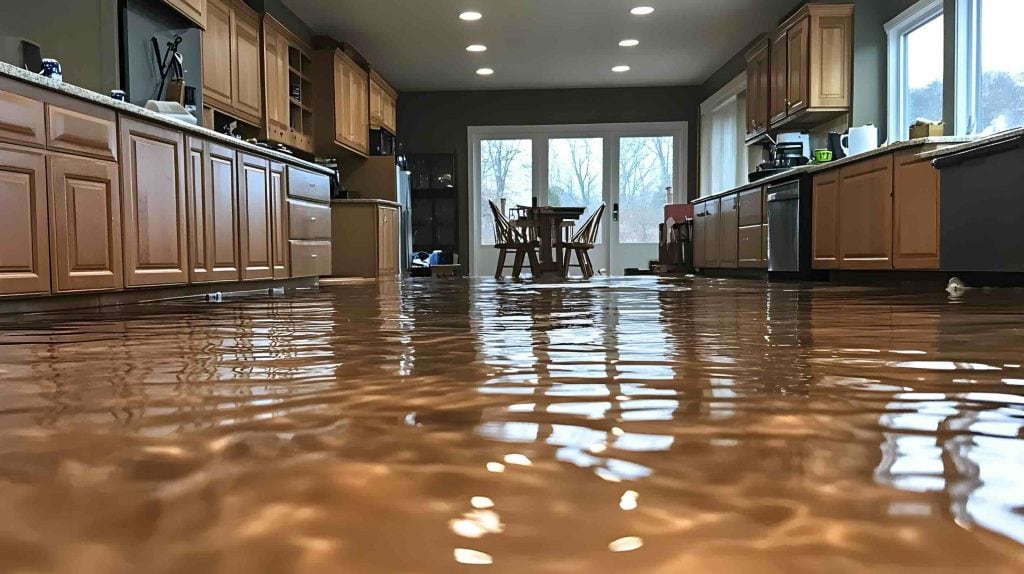
Is This Really a Water Emergency? When to Call Immediately
Is water damage an emergency? Water showing up where it shouldn’t be is never a good sign, but your first concern shouldn’t be how to clean it up (though that is something you still need to think about). Your first concern should be whether you’re facing a water damage emergency and how quickly you need to respond.
Getting this call right in the first few minutes can shape everything that follows.
The Two Questions That Actually Matter
There are two things that determine how serious water damage is: how much water is involved, and whether that water is contaminated. While a large volume of water can cause some serious damage, it’s less of a health risk than contaminated water.
So, is water damage an emergency every time you find water where it shouldn’t be? Not necessarily.
| Factor | Lower Urgency | Higher Urgency |
| Volume | A small, contained drip or spill | Continuous flow, rising water, or a large affected area |
| Water source | Known, clean source (supply line, appliance) | Unknown source, sewage, or potentially contaminated floodwater |
| Location | Away from electrical components | Near outlets, switches, or the breaker panel |
| Rate of change | Static, not spreading | Actively spreading or rising |
When to Treat Water Damage as an Emergency
- Any water near electrical outlets, switches, or your home’s breaker panel.
- Any water with a foul odor, visible contamination, or known sewage source.
- Water that is actively rising or spreading rather than contained.
- Any situation where you can’t determine the source or whether the water is spreading.
Each of these situations should be treated as an emergency. If the area isn’t safe, leave and call a professional rather than risk your health trying to investigate the situation yourself.
When It Is Likely Manageable, But Still Worth a Call
Not all water damage is equal. If you catch a leak early and it’s small, contained, from a known, clean source, and not near any electrical components, it’s usually lower urgency. However, it’s still worth keeping an eye on. Small leaks can still cause hidden water damage, so if the source is not fully resolved, it’s good practice to reach out to a professional, such as the Dryco team.
Why This Decision Matters So Much
If you dismiss a genuine emergency, you not only run the risk of water damage spreading further into your home, but you increase the chance of potential health risks, especially from contaminated water. What could’ve been a same-day fix can quickly turn into a multi-day restoration project.
At the same time, knowing that a leak isn’t an emergency-level concern can prevent unnecessary panic and help you keep a clear head when deciding what to do next.
Dryco is available 24/7 for emergency response throughout the Duluth region.
Frequently Asked Questions
Q: What if I’m not sure whether the water is contaminated?
If you’re unsure about the source of the water or whether it’s contaminated, treat it as contaminated. Avoid direct contact, keep children and pets away from the area, and call a professional for an assessment rather than risking your health by guessing.
Q: Is a small leak ever worth an emergency call?
Yes, especially if it is ongoing, its source is unclear, or it is near electrical components. A leak that seems small on the surface can be damaging flooring, drywall, insulation, or other materials you can’t see. When in doubt, a quick call for guidance is worthwhile.
Q: Can I wait until morning if the leak happens at night?
It depends. If water is actively flowing or spreading, is contaminated, or is creating an electrical hazard, don’t assume it’s safe to wait until morning. Water damage restoration companies, including Dryco, offer 24/7 emergency response because getting water under control quickly can help limit further damage.
Resources
Dryco: