
Is a Flooded Basement Covered by Insurance? What Duluth Homeowners Need to Know
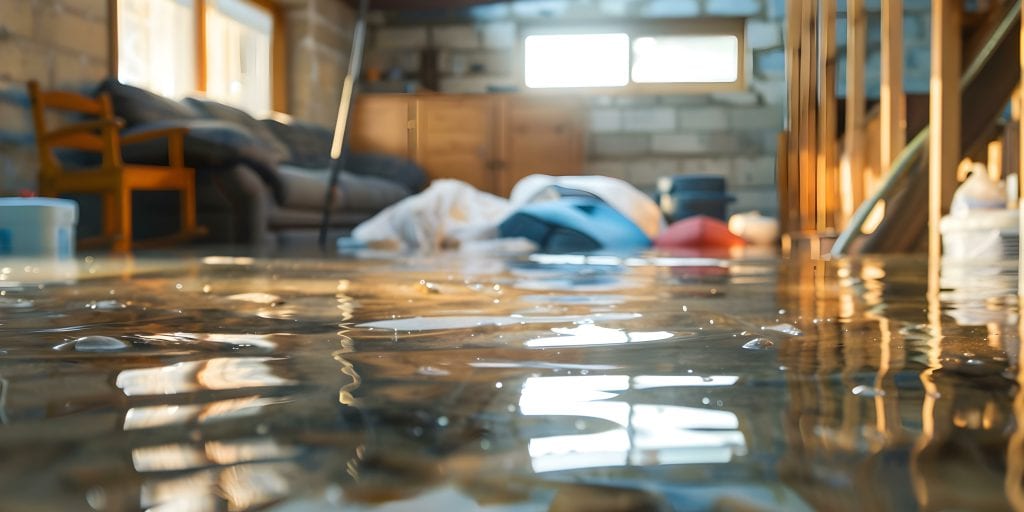
After discovering a flooded basement, the next question almost every homeowner asks is: will my insurance pay for the cost of the cleanup? The honest answer is that it depends on how the water entered your home and what your homeowners policy explicitly covers. These two factors almost exclusively determine whether your flooded basement is covered by insurance.
The Core Rule: Sudden and Accidental vs. Gradual and External
Standard homeowners insurance policies are built around covering sudden, accidental water damage originating inside your home, such as a burst pipe or failed appliance. They are generally not built to cover water that enters from outside the home, such as storm runoff, groundwater, or river flooding, which falls under a separate flood insurance system entirely.
| Cause of Flooding | Covered by Standard Homeowners Policy? | What Provides Coverage |
| Burst pipe | Yes, typically | Standard dwelling coverage |
| Washing machine or dishwasher failure | Yes, typically | Standard dwelling coverage |
| Water heater failure | Yes, typically, for resulting water damage | Standard dwelling coverage |
| Sewer or drain backup | No, unless an endorsement is added | Water/sewer backup endorsement |
| Sump pump failure | No, unless an endorsement is added | Sump pump failure or Water/sewer backup endorsement |
| Surface water / storm flooding | No | Separate flood insurance policy (NFIP or private) |
| Groundwater seepage through foundation | No | Generally excluded under standard homeowners coverage |
The Water/Sewer Backup Endorsement: The Coverage Gap Most Homeowners Miss
Sewer and drain backup is generally excluded from standard homeowners policies unless you have an applicable endorsement.
A water backup endorsement, sometimes called a sewer backup rider, is available as an add-on to many homeowners policies. If your basement is vulnerable to sewer or sump pump backups, this endorsement can provide an important layer of protection as part of your flooded basement insurance coverage in Minnesota. Without it, a sewer backup claim will typically be denied because standard homeowners policies generally exclude this type of damage. With it, coverage is often subject to a separate sublimit, distinct from your main dwelling coverage.
Check your policy’s declarations page for language like “sewer backup,” “water backup,” or “sump pump overflow” to confirm whether you already have this coverage.
Flood Insurance: A Completely Separate Policy
Flood insurance, whether purchased through the National Flood Insurance Program or a private insurer, is separate from standard homeowners insurance and is designed to cover qualifying flood damage from external sources. However, flood insurance has specific limitations for basements, particularly for certain contents and finished materials. If your basement floods because of surface water, heavy rainfall, or another qualifying flood event, coverage depends on the flood policy’s terms and the type of property that was damaged.
What to Do Before You File a Claim
- Photograph and document the water level, affected areas, and damaged belongings before cleanup begins.
- Check your declarations page for water backup or sewer backup endorsement language before assuming coverage does or does not apply.
- Call your insurance agent to report the loss and ask directly what type of water event is covered under your specific policy.
- Get a written scope of damage from a restoration professional to document the extent of the loss and support your claim.
Dryco works directly with insurance carriers and adjusters throughout the Duluth region. See our agent and adjuster information page, along with our resource on navigating property claims.
Frequently Asked Questions
Q: I don’t have a sewer backup endorsement. Is there anything I can do after the fact?
Endorsements must be in place before a loss occurs and cannot be applied retroactively to a flood that has already taken place. If you do not currently have this coverage, consider adding it once your basement is restored to protect against future events.
Q: My basement flooded from a mix of causes. How does that get covered?
Mixed-cause losses can be more complex to adjust because different parts of the damage may fall under different coverage provisions or exclusions. Your insurer will review the circumstances and policy language to determine what, if anything, is covered. A detailed restoration scope with moisture readings throughout the space helps support an accurate assessment.
Q: Does renters insurance cover a flooded basement?
The building itself is generally the landlord’s responsibility, while renters insurance primarily covers the tenant’s personal property and certain additional expenses. Check your specific renters policy to see whether it includes water backup coverage for your belongings.
Resources
Dryco:
Agent and Adjuster Information
Flooded Basement Cleanup Services
External:
FloodSmart.gov: National Flood Insurance Program
NerdWallet: Does Homeowners Insurance Cover Plumbing Problems?