
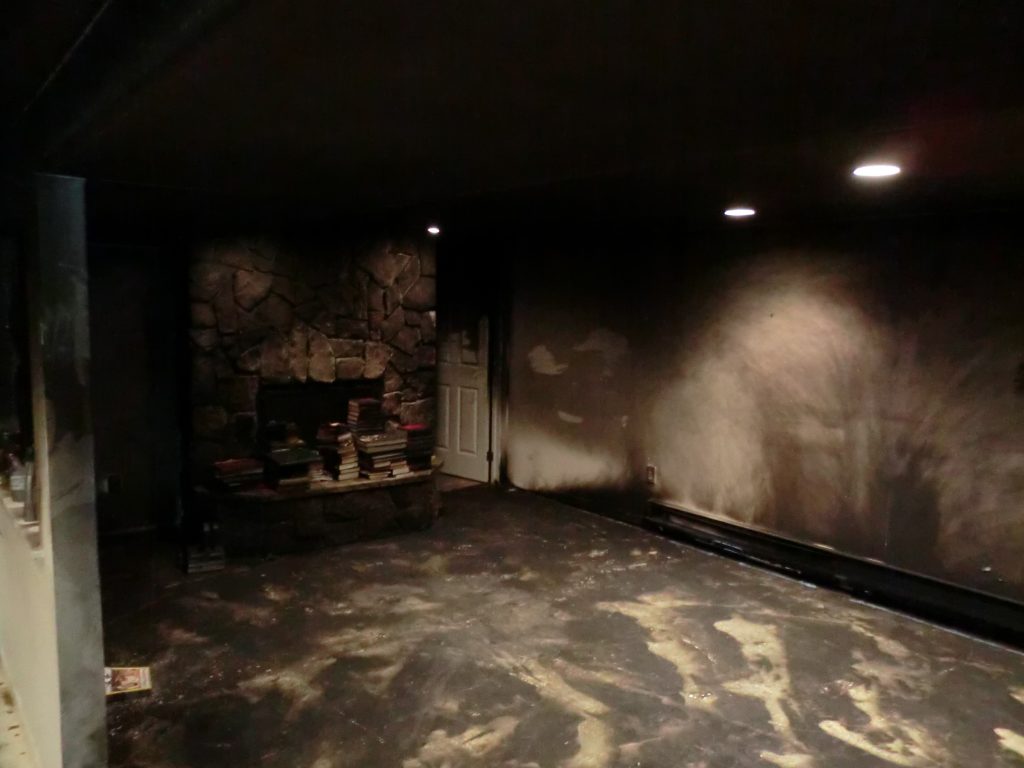
The Hidden Dangers of Wildfire Smoke
Is wildfire smoke dangerous? Absolutely. Wildfire smoke and soot are made up of fine particulate matter (PM2.5), toxic gases, carcinogens, heavy metals, and other harmful chemicals that can linger inside your home long after the fire is out. Even if your property never sustained direct fire damage, contamination isn’t always visible, leading to hidden health risks.
Understanding these risks is the first step toward protecting your health and determining whether professional smoke remediation is needed.
What Is Wildfire Smoke Made Of?
Wildfire smoke is a complex mix of pollutants that changes depending on what is burning. According to the EPA, common contaminants include:
- Fine particulate matter (PM2.5): particles smaller than 2.5 microns that penetrate deep into lung tissue and enter the bloodstream. PM2.5 is the primary health hazard from wildfire smoke.
- Gases like nitrogen, water vapor, carbon dioxide, and methane.
- Carbon monoxide: produced by incomplete combustion; displaces oxygen in the blood.
- Polycyclic aromatic hydrocarbons (PAHs): known carcinogens produced when organic material burns at lower temperatures, common in wildfire conditions.
- Acrolein: a severe respiratory irritant formed when vegetation burns; causes immediate eye, nose, and throat irritation.
- Formaldehyde: released from burning treated wood, composite materials, and vegetation.
- Heavy metals: lead, arsenic, chromium, and cadmium from burned painted surfaces, treated lumber, and vehicles.
- Benzene: a carcinogen released from burning plastics, synthetic materials, and fuel.
- Hydrogen cyanide: produced when synthetic materials and nitrogen-containing compounds burn.
When structures burn within a wildfire, as we saw in the Stewart Trail Fire near Two Harbors this spring (which destroyed over 30 buildings, including 8 homes and cabins), the smoke is more likely to contain harmful toxins. The EPA’s wildfire indoor air quality guidance notes that when homes burn, combustion byproducts from insulation, flame retardants, electronics, plastics, furnishings, and other household materials are released into the smoke.
How Wildfire Smoke Enters Your Home
Many homeowners assume that if their home is intact, they are safe from smoke. In reality, wildfire smoke infiltrates homes through multiple pathways:
| Entry Point | How Smoke Enters | Areas Affected |
| HVAC system | Return air ducts pull in smoke-laden outdoor air while system runs | All rooms; ductwork; air handler |
| Window and door gaps | Smoke infiltrates through weatherstripping gaps, especially in older homes | Perimeter rooms; window frames |
| Attic vents | Passive vents draw smoke into attic; insulation absorbs compounds | Attic; ceiling cavities; upper floors |
| Exhaust fans and bath vents | Backdraft when a pressure differential exists | Bathrooms; kitchens; laundry rooms |
| Fireplace and chimney | Downdrafts carry smoke directly into living spaces | Living areas near fireplace |
| Foundation cracks and crawl spaces | Ground-level smoke and ash infiltrate subfloor areas | Crawl space; basement; subfloor |
Who Is at Highest Risk?
While wildfire smoke is harmful to everyone, certain populations face disproportionate health risks. The CDC and the Minnesota Department of Health both identify the following as high-risk groups:
- Children under 18: breathe more air per pound of body weight than adults; developing lungs and immune systems are more vulnerable.
- Adults over 65: reduced lung capacity and immune function increase susceptibility.
- Anyone with asthma, COPD, or other respiratory conditions: wildfire smoke triggers immediate flare-ups and can cause hospitalization.
- People with cardiovascular disease: PM2.5 particles enter the bloodstream and increase risk of heart attack and stroke.
- Pregnant women: smoke compounds including PAHs and carbon monoxide affect fetal development.
- Outdoor workers: extended exposure during active smoke events.
For these groups especially, the question “Is wildfire smoke dangerous?” has a clear answer: Yes. It can mean the difference between manageable exposure and a medical emergency.
Health Symptoms to Watch For
Exposure to wildfire smoke can cause symptoms ranging from mild irritation to serious medical events. Seek medical attention if symptoms are severe or persistent.
| Symptom Category | Mild Exposure | Moderate Exposure | Severe Exposure |
| Respiratory | Coughing, throat irritation | Shortness of breath, wheezing | Difficulty breathing, chest pain |
| Eyes | Watering, redness | Burning sensation, blurred vision | Severe inflammation |
| Neurological | Mild headache | Dizziness, confusion | Loss of consciousness (CO exposure) |
| Cardiovascular | Elevated heart rate | Chest tightness, palpitations | Cardiac event risk |
| Skin | Irritation from ash contact | Rash, skin inflammation, or chemical irritation | Serious chemical burns |
What This Means for Home Cleanup
Understanding the toxicology of wildfire smoke changes how you approach cleanup. This is not ordinary housecleaning. The residues left behind on surfaces, in ductwork, and embedded in porous materials continue to release volatile compounds while hazardous residues remain on surfaces and in porous materials for weeks to months after a fire. Every time you disturb soot without proper protection, you are re-aerosolizing those compounds.
Cole Fechner, VP of Dryco Restoration Services, was consulted by WDIO-TV during the 2025 wildfire response: “Remaining safe, remaining vigilant. There’s a lot of carcinogens in fires, so what you breathe has a big impact on what you want to take on yourself.”
If your home has suffered from wildfire damage, contact professionals like the Dryco team immediately. We’re available 24/7 in the Duluth area.
Frequently Asked Questions
Q: How long does wildfire smoke stay dangerous after the fire is out?
Smoke residues on surfaces and in building materials remain hazardous for extended periods if they are not properly removed. PM2.5 particles can remain embedded in porous materials, while volatile organic compounds (VOCs) may continue to off-gas over time. Homes in heavy smoke zones should not be fully occupied until air quality testing confirms safe levels. While the timeline can vary drastically depending on the level of contamination, it may take months to years for wildfire smoke to no longer be considered dangerous. This time period will be extended if a structure is closed or sealed off for long periods of time.
Q: Is it safe to return home after evacuation orders are lifted?
Lifting of evacuation orders means the immediate fire danger has passed, not that indoor air quality is safe. Homes should be assessed for smoke contamination before resuming normal occupancy, particularly for high-risk household members. If outdoor air quality has improved, open windows to ventilate the home before spending extended time indoors.
Q: My home smells fine after the wildfire. Is it safe?
Not necessarily. Some of the most hazardous compounds in wildfire smoke, including carbon monoxide, benzene, and certain heavy metals, are odorless. A lack of visible soot or obvious odor does not confirm safe air quality. Professional air quality testing provides the most reliable assessment of indoor air quality.
Q: Should I see a doctor after wildfire smoke exposure?
Yes, if you experienced any symptoms during or after the smoke event, particularly respiratory symptoms, chest tightness, or prolonged headaches. Mention your exposure to wildfire smoke specifically, as this changes the clinical picture from ordinary respiratory illness.
Resources
Dryco:
Fire and Smoke Damage Restoration Services
Two Harbors Fire and Smoke Damage
External:
EPA: Wildfires and Indoor Air Quality