Flood Recovery Guide: Cleanup, Disinfecting, and Repairs After a Basement Flood
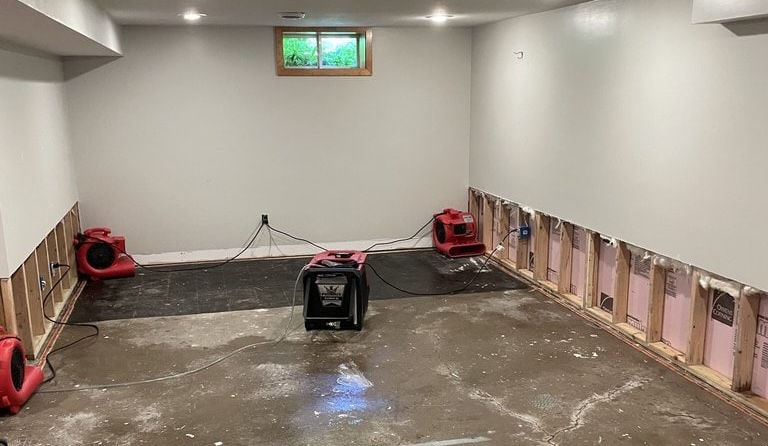
Once the water is extracted and the space has been professionally dried, the recovery phase of a basement flood begins. This stage helps prevent lingering odors, mold growth, and unnecessary repair work by addressing hidden moisture. This guide covers the flood damage restoration process in Duluth, from cleaning and disinfecting through salvage assessment and repair planning.
Step 1: Deep Cleaning and Disinfecting
Surfaces where floodwater made contact need to be cleaned or removed, and the appropriate method depends on the corresponding water category. Clean water has no requirements, but antimicrobial treatment is recommended due to the time that materials sit wet, and the contaminants already present on affected surfaces (dirt, dust, and bacteria). Water contaminated with sewage or other harmful pathogens requires appropriate cleaning/disinfection using an EPA-registered disinfectant, or demolition/removal.
| Surface | Clean Water Approach | Contaminated Water Approach |
| Concrete floor | Mop with soap/degreaser (recommended) Spray with antimicrobial (recommended) | Mop with soap/degreaser (Recommended) Spray with antimicrobial (Required) |
| Painted drywall (salvageable sections) | Wipe down with mild cleaner or spray with antimicrobial | Removal is required, as is antimicrobial treatment |
| Metal shelving and fixtures | Wipe down and dry thoroughly to prevent rust | Disinfect, dry, and check for corrosion |
| Hard-surface furniture | Clean and dry fully before returning to use | Disinfect all surfaces; assess drawers and joints for trapped moisture |
Step 2: Deciding What to Salvage vs. Replace
Not everything that got wet needs to be thrown away, but some materials cannot be safely restored.
- Often salvageable: hard-surface furniture, metal items, non-porous flooring like tile or sealed concrete, dishes and glassware, most clothing if laundered promptly
- Evaluate individually: upholstered furniture and mattresses (professional cleaning may save lightly affected items; contaminated or sewage-exposed items may need to be discarded), wood furniture (depends on finish and moisture duration), electronics (require professional inspection before powering on)
- Often requires replacement: carpet padding, wet insulation, heavily contaminated drywall, and particleboard or MDF furniture
Step 3: Odor Elimination
Lingering musty odor after a flood often indicates residual moisture or mold growth somewhere in the structure, most commonly inside wall cavities, under flooring, or in materials that were not fully dried. If the odor persists, a moisture inspection can help identify hidden moisture or early mold growth.
Step 4: Planning Repairs the Right Way
Once the affected materials have been cleaned, dried, and assessed, you can begin any needed repairs, such as replacing drywall, flooring, insulation, or framing. Rebuilding typically follows the mitigation and restoration phase and may involve a separate contractor.
For homeowners who need flood damage restoration in Duluth, Dryco handles the mitigation: extraction, drying, cleaning, and disinfecting. For rebuilding work such as new drywall, flooring, or structural repairs, we provide a clear scope of the affected areas so you can hire the appropriate contractor.
Step 5: Preventing the Next Flood
Common prevention measures include grading soil away from the foundation, extending downspouts several feet away from your house and directing water toward a drainage area, and installing a battery backup for your sump pump. You may also want to review your homeowners insurance for water backup coverage.
When to Call Dryco
If you need flood damage restoration in Duluth after a basement flood, Dryco can assess the affected areas and determine whether additional drying, cleaning, or remediation is needed.
Contact Dryco 24/7 | Water Damage Restoration Services | Mold Damage Remediation
Frequently Asked Questions
Q: How soon can I put furniture back in the basement?
Only after moisture readings confirm the space, including framing and subfloor if applicable, has returned to a safe baseline level. Putting furniture back too soon can trap residual moisture against surfaces and create a new mold risk.
Q: Is it safe to finish a basement that previously flooded?
Yes, provided the basement has been thoroughly dried, cleaned, and any contaminated or damaged materials have been properly addressed.
Q: My basement smells musty even though it looks dry. What should I do?
Schedule a moisture inspection before finishing or refurnishing the space. A persistent musty smell can indicate hidden moisture or mold growth even when surfaces appear dry.
Resources
Dryco:
Flooded Basement Cleanup Services
Top Causes of Water Damage and How to Prevent Each One
Risk Factors for Water Damage in Homes
External: