Flood Restoration Process: Timeline, Drying Steps, and What to Expect
Once the water source is stopped and everyone is confirmed to be safe, the professional flood restoration process generally follows a standard sequence. Understanding the process helps home and business owners know what to expect, how long drying may take, and what to ask a restoration company.
The Standard Flood Restoration Sequence
| Phase | What Happens | Typical Duration |
| 1. Assessment and safety check | A project manager assesses problem areas and creates a scope of work. This assessment includes moisture testing, and evaluation of current environmental and material conditions. | Same day, 1-2 hours |
| 2. Water extraction | Pumps and industrial wet vacuums remove standing water. | 2+ Hours (Dependent on Volume) |
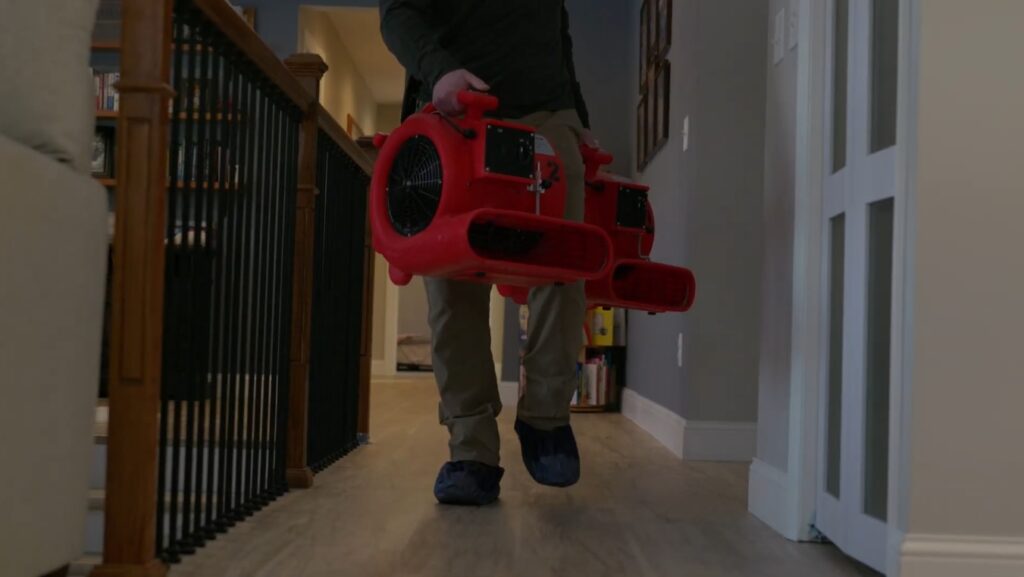
| 3. Structural drying | Industrial air movers and dehumidifiers reduce moisture in affected materials and areas. | 2 to 5 days, depending on conditions |
| 4. Cleaning and disinfecting | Affected surfaces are cleaned and treated, with additional precautions for contaminated water | 1 to 2 days, often overlapping with drying |
| 5. Monitoring and clearance | Follow-up moisture readings confirm the space has reached appropriate drying targets | Ongoing through the drying period |
What Determines the Timeline
Several factors extend or shorten the flood restoration process:
- Volume of water and how long it sat before extraction began
- Type of materials affected: drywall and carpet padding that stay saturated for days must be removed
- Whether the water was classified as clean, gray, or black water, which affects the necessary cleaning, disinfection, safety procedures, and demolition scope
- Ambient humidity and temperature, which affect how efficiently dehumidifiers can pull moisture out of the air
- Whether hidden cavities such as wall interiors were affected, which requires longer, more targeted drying
What a Professional Restoration Company Should Provide
- A written scope of work identifying exactly which areas are affected
- Moisture readings throughout the drying phase, documented for your records and, where applicable, your insurance claim
- Clear communication about which materials can be dried in place versus which need to be removed
- A final moisture clearance confirming the space has reached appropriate moisture levels based on unaffected materials
Note that Dryco’s flood restoration process covers extraction, drying, cleaning, and disinfecting. If materials such as drywall, flooring, or framing need to be removed and replaced, we can help document exactly what was affected so you can coordinate the necessary rebuilding work with a licensed contractor.
DIY vs. Professional Restoration
| Factor | DIY Approach | Professional Approach |
| Water extraction speed | Household wet vac; slow for large volumes | Industrial pumps and extraction units; much faster |
| Drying equipment | Household fans; limited humidity reduction | Industrial air movers and dehumidifiers |
| Moisture verification | Visual inspection or basic moisture meter | Moisture meters and thermal imaging with documented readings |
| Insurance documentation | Homeowner’s photos, notes, and receipts | Professional scope of work and documentation to support the claim |
| Mold risk reduction | Difficult to verify; hidden moisture may remain | Drying verified against appropriate moisture targets for affected materials |
Not sure whether to hire a professional or handle the restoration yourself? See our guide to hiring a professional vs. DIY for restoration work.
Frequently Asked Questions
Q: How do I know when my basement is fully dry?
Professional restoration companies verify drying with moisture meter readings compared with unaffected materials and appropriate moisture targets, rather than relying on visual inspection or touch. A space can feel dry to the touch while still holding excess moisture inside drywall or framing.
Q: Can restoration happen while I’m not home?
Yes, drying equipment can often run unattended once it has been properly installed and the property is safe. Many restoration companies provide regular updates and photos during the drying process. Extraction and initial assessment may require someone to provide access, but the multi-day drying phase does not require you to be home continuously.
Q: What happens if mold is discovered during the drying process?
If mold is found, the restoration plan may need to include containment and remediation procedures alongside the drying process. This is one reason working with a company experienced in both water and mold restoration matters, since the two issues are often connected.
Resources
Dryco:
Flooded Basement Cleanup Services
External:
IICRC S500 Standard for Professional Water Damage Restoration