

At What Temperature Do Pipes Freeze? How Fast It Happens and the Warning Signs
Frozen pipe damage can cause a lot of issues, so when the cold starts to set in, many folks may find themselves asking at what temperature pipes freeze. You’ll often see 20°F listed as the danger zone, but there’s no single temperature every pipe will freeze at.
The chance of your pipes freezing depends largely on the climate of the area you live in and how they’ve been protected against it.
| The short answer Water freezes at 32°F. That doesn’t mean your pipes will freeze as soon as temperatures reach that point. In University of Illinois tests, ice began forming in pipes in an unheated, insulated attic once the outdoor temperature dropped below 20°F. But heat, insulation, air leaks, wind, and how long the cold lasts matter as much as the number. |
Where the 20°F Number Comes From
The most cited research comes from the University of Illinois, and it is summarized by the Insurance Institute for Business and Home Safety (IBHS). Researchers placed water pipes in an unheated, insulated attic. They found that ice consistently started to form when the outdoor temperature dipped just below 20°F.
A separate survey of 71 plumbers in southern states reached a similar conclusion. The consensus was that burst-pipe problems start appearing when temperatures fall into the teens.
Water can supercool, dropping several degrees below 32°F before any ice begins to form. That is one reason the real trigger is often a bit below freezing.
However, the 20°F threshold is mainly a benchmark for homes in the South, where pipes have less protection against the cold because temperatures rarely drop to freezing. Homes in the North generally have better protection against freezing because they’re designed for colder weather. Pipes are usually insulated or routed through heated areas.
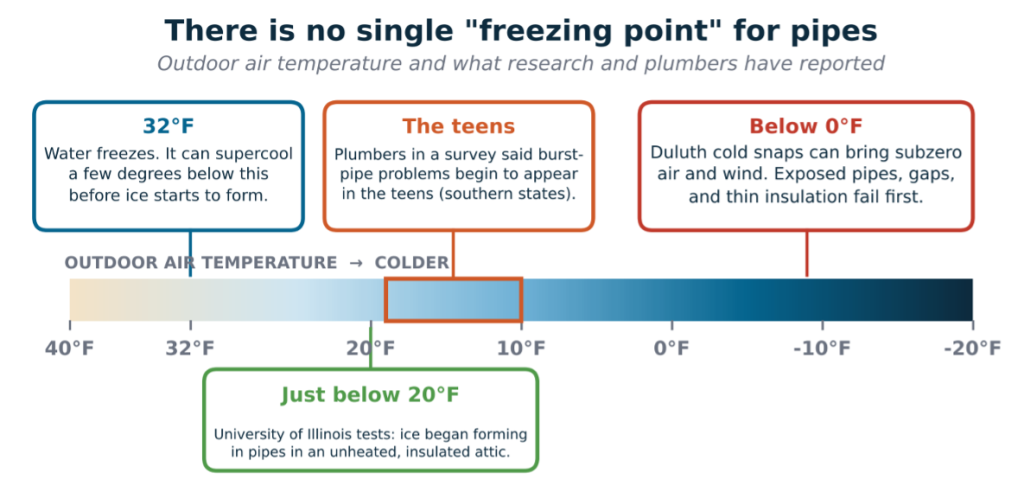
Figure 1. Thresholds reported by research and plumbers. None of them is a guarantee.
So, what does that mean in Duluth? Cold snaps can bring subzero air and wind. A well-built, well-insulated home has a lot of protection. But every house has weak spots, and a long cold stretch will find them.
What Matters More Than the Temperature
The same outdoor temperature that can freeze a pipe in one house will leave another untouched. There are a few factors behind this:
- Heat: A pipe being heated by the house is far less likely to freeze than one in an unheated space.
- Insulation: Insulation around the pipe and in the surrounding walls, attic, or crawl space slows heat loss.
- Exposure to cold air: A flow of subfreezing air across a pipe is a major risk. A small gap or hole can be enough.
- Moving air: Cold air blowing across an exposed pipe increases heat loss, making it more likely to freeze. Drafts through gaps in walls can have a similar effect.
- How long the cold lasts: A brief dip rarely freezes a pipe through, but a long stretch of cold does.
Pipe size and material also affect how fast ice forms, but to a very minor degree when you take everything else into account.
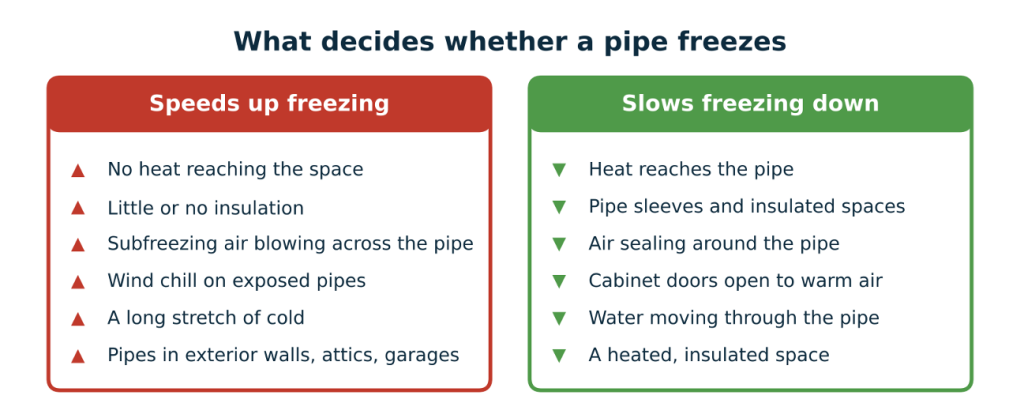
Figure 2. Heat, insulation, and airflow decide the outcome more than pipe size or material.
Pipes can freeze anywhere because of cracks or holes in siding or because pipes sit in outside walls with inadequate insulation.
How Fast Can Pipes Freeze?
A pipe’s freezing speed depends on the factors above. Exposed, uninsulated pipes can take several hours to freeze.
| What changes the clock | Faster | Slower |
| Location | Exterior wall, attic, garage, crawl space | Interior wall in a heated room |
| Insulation | None or thin | Pipe sleeves and insulated spaces |
| Air movement | Wind or a draft hits the pipe | Still, warm air around the pipe |
| Duration of cold | Days of sustained subfreezing air | A brief dip |
| Water movement | Water sitting still | Water slowly flowing from a drip |
| Heat in the home | Thermostat lowered or heat failure | Heat kept steady day and night |
A furnace failure can quickly increase the chances of your pipes freezing. Be sure to check your heating system before the cold sets in and that you know what to do if it fails during a cold snap.
Where Pipes Freeze First
Knowing the high-risk spots helps you protect them. The highest-risk places for frozen pipes include areas against exterior walls and where the water service enters the home through the foundation. It adds that the pipes that freeze most often are outdoor hose bibs, swimming pool supply lines, and sprinkler lines.
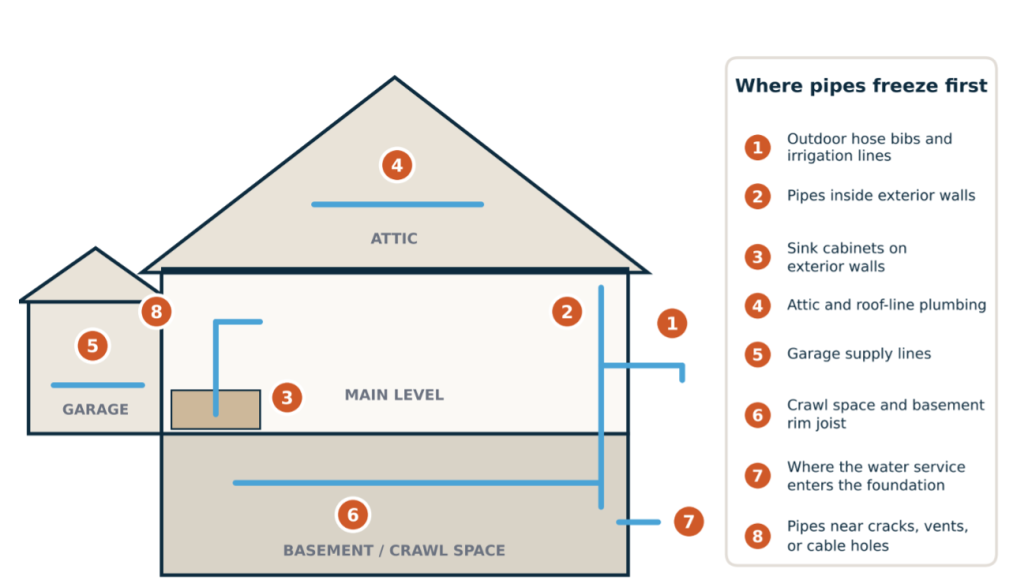
Figure 3. Eight places to check before a hard freeze.
IBHS lists water supply pipes in unheated interior areas as well. These include basements, crawl spaces, attics, garages, and kitchen cabinets. Pipes that run inside exterior walls with little or no insulation are also at risk.
| Spot | Why it is vulnerable | Quick protection |
| Outdoor hose bibs | Fully exposed to cold air. | Disconnect and drain hoses. Close the indoor valve. |
| Pipes in exterior walls | Little heat reaches them. | Insulate where accessible. Seal air leaks. |
| Sink cabinets on exterior walls | The cabinet door traps cold air against the pipes. | Open the doors during a freeze. |
| Attic plumbing | Cold air and little heat. | Insulate pipes and add attic insulation. |
| Garage supply lines | Garage doors let in cold air. | Keep the garage door closed. |
| Crawl space and rim joist | Drafty and unheated. | Seal gaps. Insulate pipes and vents. |
| Water service entry | Cold foundation and gaps. | Seal around the entry point. |
Warning Signs a Pipe Is Freezing
Frozen pipes can be a headache, but they at least warn you that there’s trouble headed your way. Knowing what to look for can help you catch the problem early.
| Sign | What it can mean | What to do now |
| A faucet gives only a trickle | The Red Cross says to suspect a frozen pipe. This is the classic first sign. | Open the faucet. Check other faucets. Look for the frozen section. |
| No water at a faucet | A full blockage, or a problem with the supply. | Leave the faucet open. Check whether neighbors have water. |
| A drip stops during a freeze | IBHS notes that the pipe may be blocked by ice. | Keep the faucet open so water can flow as ice begins to thaw. |
| Frost on an exposed pipe | The pipe is very cold, and ice may be forming inside. | Add heat to the space. Warm the pipe gently. |
| A bulge or crack in a pipe | The pipe may already be damaged. | Shut off the main valve. Call a plumber. |
| Wet spot or sound of running water | A split may already be open. | Shut off the main valve. Call for help. |
| Check more than one faucet The Red Cross advises checking all other faucets when you find one frozen pipe. If one pipe froze, others may have frozen too. |
Why a Frozen Pipe Becomes a Burst Pipe
A frozen pipe is not yet a burst pipe. That danger comes from pressure. Once ice forms a complete plug, continued freezing can cause pressure to start building between it and a closed faucet. The pipe may split as a result. Because splitting usually happens at a spot with little or no ice, it’s not uncommon to find one in a heated room.
This is why a pipe under a bathroom sink can fail even though that section never felt cold. The ice may have formed in an unheated space on the other side of the wall, while the pipe splits somewhere warmer. The key to avoiding frozen pipe damage is the window between freezing and bursting.
Is It Your Pipe or a City Water Main?
In Duluth, a loss of water does not always mean your own pipe froze. Duluth Public Works staff have explained that the freeze-thaw cycle is the main contributor behind many water main breaks. As temperatures swing, the ground shifts, and aging mains break. It doesn’t help that much of the water infrastructure is more than fifty years old.
Frost reaches 4 to 6 feet deep while mains typically sit 7 to 8 feet down. If there’s a break, it may not always be obvious because of snow and slush in late winter.
| Clue | More likely your pipe | More likely a city main |
| Do neighbors have water? | Yes, they do. | No, several homes are out. |
| Water in the street or yard? | No. | Yes, or a wet, icy patch outside. |
| Which faucets are affected? | Often one or a few on a cold wall. | Several faucets or the entire home. |
| Official alerts? | None. | A Northland Alert or an outage map entry. |
| Wet spots inside? | Possible if a pipe split. | Unlikely, unless the service line is damaged. |
Sign up for the City’s Northland Alert to get notices about utility problems in your area. If you think a main has broken, report it to Duluth Public Works. Check the City of Duluth website for the current contact information.
What to Do When the Forecast Turns Cold
A hard freeze is easier to handle if you prepare. You can prevent frozen pipes with a few quick steps:
- Open the cabinet doors under sinks on exterior walls.
- Let cold water drip from faucets that are fed by exposed pipes.
- Keep the heat steady, day and night. If you are away, never let it fall below 55°F.
- Disconnect and drain garden hoses, close the indoor valves to hose bibs, and open the outdoor faucet to drain any remaining water.
- Find your main water valve and make sure everyone knows where it is.
When a Frozen Pipe Turns into Damage
If a pipe splits, water can spread fast. State Farm says a one-eighth-inch crack can spray more than 250 gallons of water a day.
Water can soak into insulation, drywall, and flooring, causing extensive damage that can get worse if it isn’t addressed quickly.
The first hour matters. Shut off the main valve, keep faucets open, and call for help. Dryco is available 24/7 for water damage in Duluth and the surrounding region, and we aim to be on site within 60 minutes in the Twin Ports area.
When you need help now, contact Dryco 24/7.
Frequently Asked Questions
Q: Do pipes freeze at 32°F?
Water freezes at 32°F, but pipes rarely freeze the moment the air hits 32°F. Water can supercool a few degrees first, and the water inside the pipe has to lose enough heat before it starts freezing. Pipes in cold, drafty spots freeze sooner than pipes in a heated wall.
Q: Is 20°F the temperature that bursts pipes?
It is a common benchmark. Ice can begin forming in pipes in unheated spaces when outdoor temperatures drop below 20°F. However, this is not a universal threshold. In colder regions, the risk depends on insulation, air leaks, wind, and how long the cold lasts.
Q: How long does it take for pipes to freeze?
It depends. It usually takes a few hours of sustained freezing temperatures for exposed, uninsulated pipes to freeze. Wind, drafts, and a lack of heat shorten that time. Insulation and steady heat lengthen it.
Q: Can pipes freeze inside a heated house?
Yes. Pipes in exterior walls, near gaps, or in cabinets against cold walls can freeze even when the room is warm. Cracks or holes in siding and poorly insulated outside walls can expose pipes to freezing temperatures. Learn more about frozen pipe burst damage.
Q: Do pipes freeze faster in wind?
Cold air blowing across an exposed pipe increases heat loss, making it more likely to freeze. Drafts through gaps in walls can have a similar effect.
Q: What is the first sign of a frozen pipe?
A faucet that gives only a trickle is one of the first signs of a frozen pipe. Open the faucet and check the others. If a pipe has already burst, see our water damage restoration services.
Resources
Dryco:
What To Do If You Have a Frozen Pipe Burst
Water Damage Restoration in Duluth
External:
American Red Cross: Frozen Pipes
State Farm: Water and Ice, Not So Nice
Live Science: Why Do Freezing Pipes Burst?