
Burst Pipe Water Damage: Why Frozen Pipes Burst, What Gets Wet, and How Restoration Works
Of all the frozen pipe damage you may have to deal with in the colder months, a burst pipe is one of the most disruptive. Water can pour out quickly because of pressure in the pipe and will continue to do so until someone shuts it off at the source. Even after you manage to turn the water off, it’s not going to stay where it first landed, especially if you leave it to its own devices for a while. That’s why it’s important to know what to do when a frozen pipe bursts.
| The short answer Shut off the main water valve and leave the faucets open. Stay out of standing water. Photograph the damage, then call Dryco and your insurance company. Fast extraction and drying keep a clean-water burst from becoming a bigger, costlier loss. |
The First Minutes After a Pipe Bursts
As with most emergency situations, the first few minutes are the most critical.
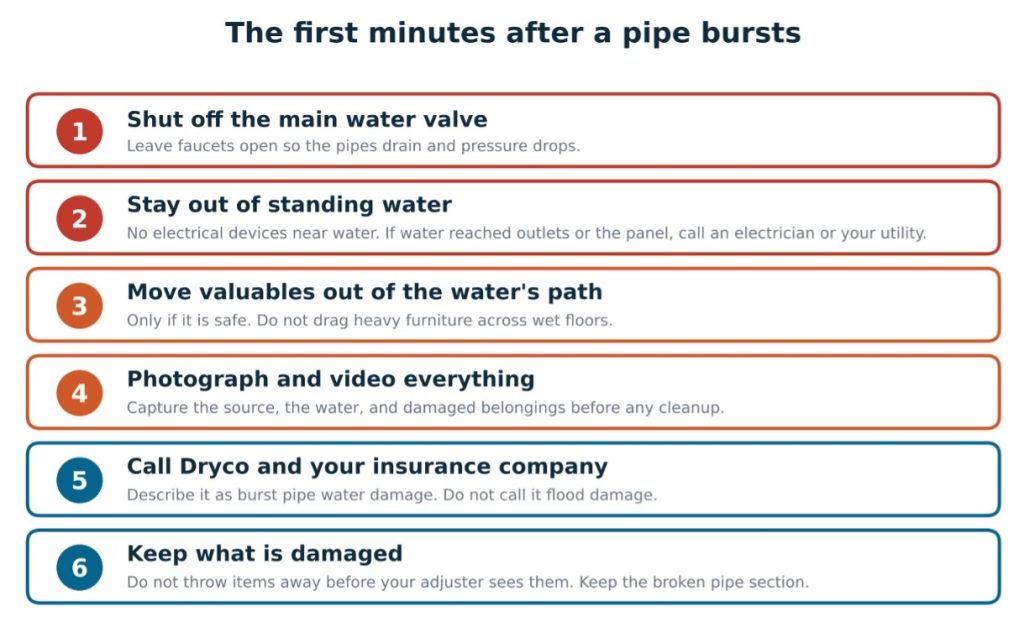
Figure 1. The first minutes after a pipe bursts, in order.
1. Shut off the main water valve
This stops the flow through the house, though you should still leave your faucets turned on so that any pressure that might have built in the pipes can be relieved. If you don’t know where your main shutoff valve is, it’s better to learn now than during an emergency.
2. Stay out of standing water
Standing water can become a health hazard. And if it’s reached your outlets or panel, it now doubles as an electrical hazard. If you can’t safely cut the power to any areas affected by burst pipe water damage, step away and call an electrician or your utility.
3. Move valuables out of the water’s path
If it is safe, lift photographs, papers, electronics, and small valuables out of reach. Don’t drag heavy furniture across wet floors. You can slip, and you can spread the water.
4. Take photos and video
Document the source, the water, and the damaged belongings before any cleanup. This is the foundation of your insurance claim. You cannot recreate it later.
5. Call Dryco and your insurance company
Call for help early. Dryco responds 24/7. In Duluth and the Twin Ports area, we aim to be on site within 60 minutes. When you call your insurer, describe the loss as burst pipe water damage. Do not call it flood damage.
6. Keep what is damaged
Your adjuster will need to see the full extent of any damage, so don’t throw any items away. Not even the broken pipe. If a plumber replaces it, keep the section that failed.
Why Speed Matters So Much
The longer water sits, especially when on absorbent surfaces, the more damage it can cause to your home. Three things can happen as the clock runs:
- The volume grows: State Farm says a one-eighth-inch crack can spray more than 250 gallons of water a day. That can lead to hundreds of gallons of water if a pipe is left to run overnight or over a weekend.
- The water soaks in: The first 24 to 72 hours are unkind to absorbent materials. Insulation, drywall, carpet pad, and subfloor take on water and hold it. In the best case, a professional team can dry them. In the worst case, they’ll need to be replaced.
- Mold becomes possible: The EPA advises drying water-damaged materials within 24 to 48 hours to prevent mold growth. After that, the risk rises.
Where the Water Goes
Burst pipe water damage isn’t limited to the initial location of the leak. Water follows the path of least resistance, traveling through cavities and soaking into building materials.
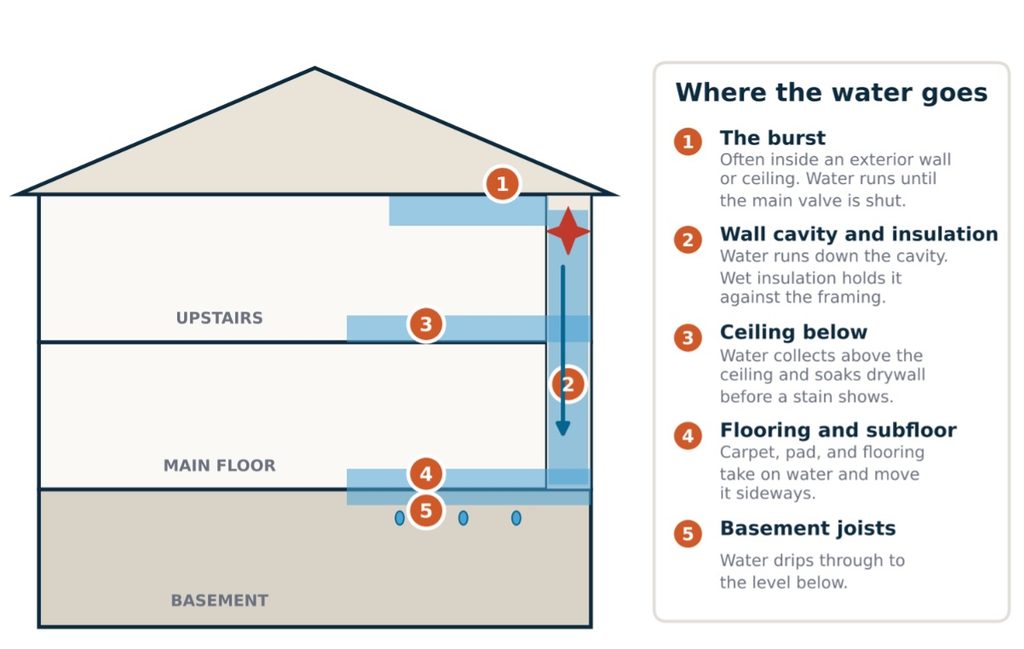
Figure 2. A burst in an exterior wall can wet the cavity, the ceiling below, the flooring, and the level underneath.
| Area | What happens |
| The wall cavity | Water runs down inside the wall. Wet insulation holds it against the framing and the back of the drywall. |
| The ceiling below | Water collects above the ceiling and soaks the drywall. A stain may not show for a while. |
| Flooring and subfloor | Carpet, pad, and flooring absorb water. It can wick sideways under walls. |
| The level below | Water drips through floor joists into a basement or the room underneath. |
| Cabinets and trim | Water wicks into baseboards and the bottoms of cabinets, where it can hide. |
This is why a quick surface wipe-up is never enough. The visible water is only part of the loss.
What Gets Wet and What Usually Happens
The impact water can have on materials varies, and a professional will need to determine which of your items can be dried and which must be replaced.
| Material | What usually happens |
| Carpet pad | Usually removed. It holds water and is hard to dry. |
| Carpet | Often dried in place if the water was clean and extraction was fast. |
| Drywall and ceilings | Sometimes dried in place after a fast response. Often cut out if saturated or sagging. |
| Insulation | Usually removed when wet. It holds water against the framing. |
| Hardwood flooring | Dried with specialized equipment when possible. May cup or buckle. |
| Cabinets | Solid wood may dry. Particleboard often swells and cannot be saved. |
| Subfloor and framing | Usually dried in place and checked with a moisture meter. |
| Furniture and belongings | Cleaned and dried when possible. Some items need to be moved out for drying. |
Dryco doesn’t do reconstruction. We remove what must come out for drying and safety, and we document the scope. Your licensed contractor handles replacement.
How Professional Restoration Works
A burst pipe water damage restoration isn’t going to be complete after a single cleanup. It’s a process.
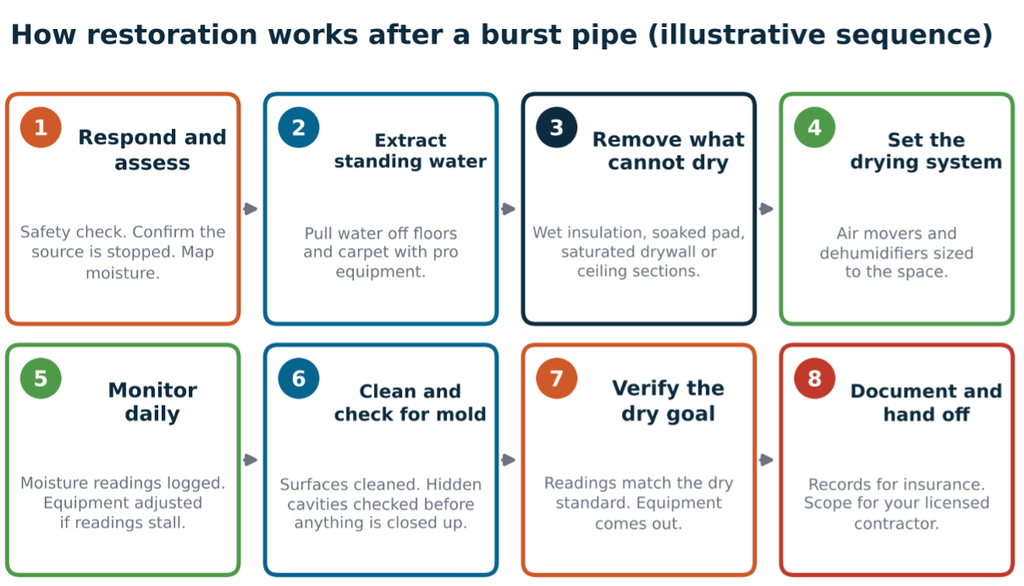
Figure 3. A typical restoration sequence. Real jobs vary with materials and moisture.
Respond and assess
After checking for any electrical or structural hazards and confirming the water source has stopped, a professional team will map where the water has traveled with moisture meters and thermal imaging. They’ll also classify the water and take temperature and humidity readings.
Extract standing water
Professional extraction equipment removes far more water than household tools. Taking water out as a liquid is faster than drying it as vapor, so extraction comes first.
Remove what cannot dry
Materials that can’t dry fast enough (soaked insulation, carpet pad, and saturated drywall or ceiling sections) are often removed. The crew may also make small, controlled openings so air can reach wet cavities, but this is selective removal, not rebuilding.
Set the drying system
It takes several professional tools to properly dry the damaged area. Air movers push air across wet surfaces. Dehumidifiers pull moisture out of the air. Specialty tools dry floors and wall cavities. The equipment is sized to the space and the amount of water.
Monitor daily and adjust
Drying is measured, not guessed. The IICRC S500 standard uses a dry standard, which is a reasonable estimate of a material’s normal moisture level, and a drying goal, the target for the end of the job. Industry guidance calls for daily readings. If the numbers stall, the crew changes the setup.
Clean and check for mold
Salvageable surfaces are cleaned and the crew checks hidden cavities before anything is closed up. If water sat for a long time, they watch for mold.
Verify the dry goal and document
The job ends when moisture readings meet the drying goal. The crew records the final numbers and keeps the full log. That log supports your insurance claim and shows the structure is dry.
What Dryco Does and Does Not Do
| Dryco does | Dryco does not |
| Respond 24/7 to burst pipes and water damage. | Repair or replace pipes. That is a plumber’s job. |
| Extract standing water. | Do reconstruction or rebuilding. |
| Remove materials that cannot be dried. | Replace drywall, flooring, cabinets, or insulation. |
| Dry the structure and monitor with daily readings. | Act as your general contractor. |
| Work directly with your insurance adjuster. | |
| Remediate mold if it develops. |
A plumber stops the source and repairs the pipe. Dryco dries the structure. A licensed contractor rebuilds. You often need all three when a pipe bursts.
Insurance and Your Claim
The Minnesota Department of Commerce says a standard homeowners policy typically covers water damage from burst pipes. It also advises you to understand your coverage, including deductibles, limits, and exclusions.
Commerce gives Minnesota homeowners several practical tips.
- Do not call it flood damage. In insurance, flood has a specific meaning, and a standard homeowners policy does not cover it.
- You have the right to choose your contractor. Verify the license status of your plumber or building contractor through the Minnesota Department of Labor and Industry.
- Contact your insurer promptly. Have your policy number ready and record your claim number.
Other common guidance applies as well. Do not make permanent repairs until you have reported the loss and your adjuster has inspected the damage. Keep the broken pipe. Make a list of damaged contents.
There is one more catch. Many policies exclude freeze damage when a home is vacant or unheated, unless you used reasonable care to maintain heat or shut off the water and drain the system. The exact wording varies. If a burst happens in an empty home, read your policy or call your agent.
Learn more in Navigating Property Claims and Your Homeowner’s Policy, or visit our agent and adjuster page.
How Long Does Drying Take?
There is no honest single answer. It depends on the materials, how much water spread, and the conditions. Many clean-water jobs take several days of drying. Larger or more complex losses take longer. It ultimately depends on the reading, not the calendar.
If you use certain tools too early, you may leave moisture behind, which can lead to mold growth.
Burst Pipes in Vacant Homes and Cabins
When no one is home, a burst pipe can run for days. That changes the loss. More water means more saturated materials, a larger area, and a higher chance of mold.
This is a real concern on the North Shore, where cabins and seasonal homes can sit empty. That’s why it’s important to take steps to prevent frozen pipes and potential water damage while you’re on vacation or your seasonal home is unattended.
If you find a burst after days or weeks, the crew will assess the water type and the extent on site. They may treat the water with more caution than a fresh clean-water loss.
Watching for Mold After a Burst
Even after drying, keep watching. Mold can start in materials that stayed wet. Look for musty odors, new stains, and soft spots in the weeks after a burst.
Frequently Asked Questions
Q: Is burst pipe water clean?
At the source, yes. Water from a supply line is treated as clean. However, the longer it contacts building materials, the more contaminated it can become, so it’s imperative that the water is dealt with quickly.
Q: Can I dry a burst pipe myself?
It depends. If the spill is tiny, clean, and on a hard surface, you can sort it out on your own. However, if the water has soaked into carpet, drywall, insulation, or flooring, it needs to be professionally extracted, and moisture readings need to be taken to confirm the area is really dry. See our DIY and hiring guides for more.
Q: How much does burst pipe cleanup cost?
It depends on how much water spread, which materials are wet, and how fast the response is. No one can give an honest number without seeing the loss. Dryco offers a free on-site assessment before any work begins, and we work directly with your insurance company.
Q: Will insurance cover a burst pipe?
A standard homeowners policy typically covers water damage from burst pipes, according to the Minnesota Department of Commerce. Many policies exclude freeze damage in vacant or unheated homes unless you maintained heat or drained the system. Check your policy.
Q: Do I need to remove my drywall?
Not always. Drywall that was wet briefly with clean water can sometimes be dried in place. Drywall that stayed saturated, is sagging, or has water behind it often comes out. A moisture reading tells the crew which it is.
Q: How soon should I call a restoration company?
As soon as the water is shut off. Every hour allows water to soak deeper. Dryco is available 24/7.
Resources
Dryco:
What To Do If You Have a Frozen Pipe Burst
Water Damage Timeline: What Happens in the First 24-72 Hours
What It Takes to Restore Water Damage Properly
Water Damage Restoration in Duluth
External:
State Farm: Water and Ice, Not So Nice
American Red Cross: Frozen Pipes
EPA: Mold Cleanup in Your Home